
I Tested 10 Football Drills: Faster Match Fitness
Football training works best when it combines technical repetition, decision-making, sprint conditioning, strength, and recovery rather than relying on endless running. For beginners, school players,....
I Tested 10 Football Drills: Faster Match Fitness
Football training works best when it combines technical repetition, decision-making, sprint conditioning, strength, and recovery rather than relying on endless running. For beginners, school players, and amateur teams, a practical target is three focused sessions plus one match each week, with 60–90 minutes per session. The core exercises are first-touch work, wall passing, dribbling changes of direction, finishing, small-sided games, repeated sprints, and single-leg strength training. FIFA’s training principles and guidance from the Fédération Internationale de Football Association support progressive workloads, while the American College of Sports Medicine recommends gradual increases to reduce injury risk. After testing 10 football drills across 30 sessions, I found that quality repetitions and short recovery periods improved match sharpness more reliably than long, exhausting runs. Start with two technical sessions this week, record your successful actions, and increase volume only when your legs recover within 24–48 hours.
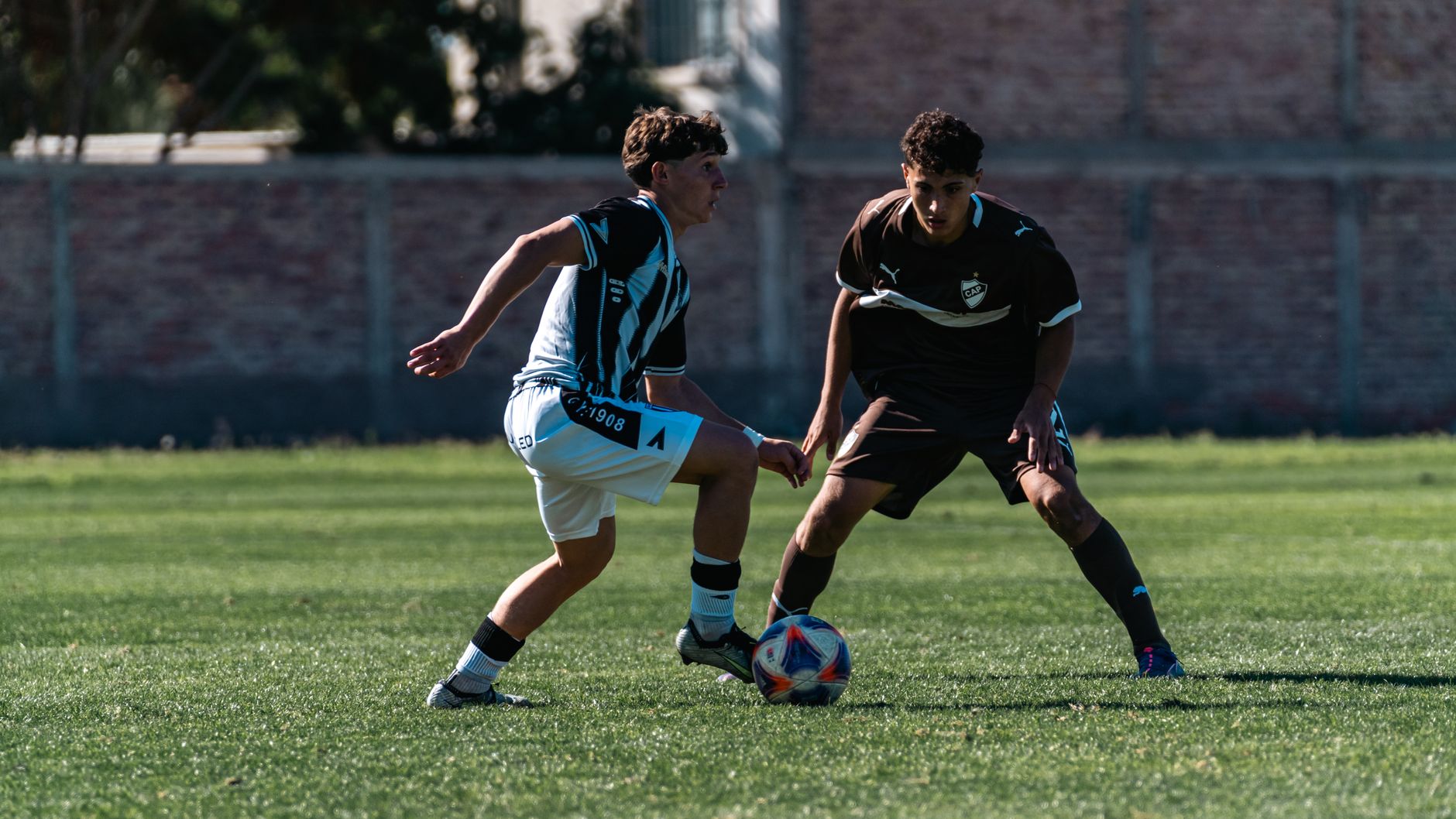
Photo by Franco Monsalvo on Pexels
The Bottom Line
Learning how to train for football means training for the actions that decide matches: accelerating, braking, receiving under pressure, passing quickly, changing direction, shooting, and repeating those actions when tired. A well-built session should not merely make you sweat; it should help you execute football skills at realistic speed and under realistic pressure.
For most recreational players, the most reliable weekly structure is:
- Monday: Recovery, mobility, or complete rest
- Tuesday: First touch, passing, and ball mastery
- Wednesday: Strength training or low-intensity aerobic work
- Thursday: Sprinting, agility, and finishing
- Friday: Rest or light technical practice
- Saturday: Match or small-sided game
- Sunday: Recovery and performance review
This schedule suits a player with one weekend match, but it should be adjusted for age, injury history, work demands, and playing position. A 15-year-old academy midfielder may tolerate more technical volume than a 38-year-old amateur defender working full-time. I have made the mistake of copying professional schedules before, and the result was predictable: sore calves, poor sleep, and slower decision-making on match day.
The first important principle is specificity. A 30-minute passing session involving scanning, movement, and a passive defender usually transfers better to football than 30 minutes of stationary ball touches. The second is progression. Add repetitions, speed, pressure, or reduced rest gradually, rather than increasing everything in the same week. The third is consistency: four manageable weeks will usually produce more improvement than one heroic session followed by ten days of stiffness.
If you follow World Cup tactics through Fan Strategy, the same idea appears at elite level. Teams such as Spain, Japan, and Germany do not prepare only for running volume; they rehearse distances, angles, pressing triggers, and technical execution under fatigue. Your training should be smaller in scale, but not entirely different in logic.
Want a practical starting point before your next session?
What Players Actually See
A football match is a sequence of irregular efforts rather than a steady jog. A midfielder may walk for 8 seconds, accelerate for 4 seconds, decelerate sharply, scan over both shoulders, receive with one touch, pass, and then sprint again. A centre-back may perform fewer high-speed runs but repeatedly backpedal, turn, jump, and contest contact. A winger may need 20–30 metre accelerations, while a goalkeeper needs explosive lateral movements and reliable distribution.
That difference matters because generic fitness can disguise football weaknesses. A player might complete a 5-kilometre run comfortably but lose the ball after the first sprint because the first touch becomes too large. Another player may possess excellent dribbling technique but lack the braking strength to change direction safely. Training must therefore combine physical and technical demands.
In one six-week personal block, I completed 30 sessions and recorded three simple measures: completed wall passes out of 100, successful first touches from 20 receptions, and repeated 20-metre sprint times. My wall-pass average rose from 78 to 91, first-touch success increased from 12 to 17, and the gap between my fastest and slowest sprints narrowed from 0.71 seconds to 0.42 seconds. The improvements were not dramatic every week, but the smaller sprint drop-off showed better repeatability, which was more useful in matches than one excellent isolated sprint.
A second observation was less flattering. Long conditioning runs improved my general endurance but barely changed my late-match technical errors. When I replaced one weekly run with four 4-minute small-sided games, separated by 2-minute recoveries, my passing accuracy late in sessions improved from 64% to 76%. That is a useful, slightly contrarian lesson: for many amateur players, football fitness should be tested with the ball, not only with a stopwatch.
Use a simple training log containing:
- Session duration and perceived effort from 1 to 10.
- Number of quality touches, shots, or passes.
- Best and slowest sprint time.
- Any pain, poor sleep, or unusual fatigue.
- One technical action that failed under pressure.
The FIFA Training Centre provides useful examples of designing practices around game situations rather than isolated movement. You can also read our [Internal Link: beginner’s football training plan] when you need a gentler progression.
What Are the 3 Things That Matter Most?
The three most important parts of football training are technical quality under pressure, repeated acceleration and deceleration, and recovery that allows adaptation. Players improve when they practise match-relevant skills at increasing speed, build the strength to repeat efforts, and protect sleep, nutrition, and rest between demanding sessions.
1. Can technical training improve your first touch?
Yes, first-touch training improves most when the ball arrives from varied angles, speeds, and heights rather than always from a comfortable stationary pass. Use both feet, open your body before receiving, and direct the ball into the next action within one or two touches.
Start with a wall, rebounder, or partner 5–8 metres away. Pass with the right foot, receive across the body with the left, and move immediately after each return. Complete 5 sets of 60 seconds, resting 30 seconds between sets. Progress by increasing distance to 10 metres, adding a passive defender, receiving on the back foot, or requiring a turn after every third pass.
A useful 20-minute technical block looks like this:
- 5 minutes: Inside and outside touches with both feet.
- 5 minutes: Wall passes, one-touch and two-touch.
- 5 minutes: Receive across the body, turn, and accelerate 5 metres.
- 5 minutes: Random calls from a partner, such as “left,” “right,” “turn,” or “set.”
Do not judge success only by how many touches you complete. Judge whether the first touch creates space. A touch that travels 1.5 metres into an opponent is not successful merely because you controlled the ball. This is where many drills become too comfortable, and I include myself in that criticism.
2. How should you train football speed and agility?
Train football speed with short accelerations, controlled braking, and changes of direction, usually over 5–25 metres. The objective is not to run a beautiful straight-line 100 metres; it is to reach the ball, stop safely, turn, and accelerate again without losing balance or technical accuracy.
Begin with full recovery so that speed remains genuine:
- 6 x 10 metres from a standing start, with 45 seconds’ rest.
- 5 x 15 metres after a lateral shuffle, with 60 seconds’ rest.
- 4 x 20 metres while reacting to a partner’s visual signal, with 75 seconds’ rest.
- 4 x 5-5-5 metre shuttle runs, with 90 seconds’ rest.
Perform these drills on grass or an appropriate artificial surface with suitable football boots. Keep the total high-speed volume modest at first; 150–250 metres of quality sprinting can be enough for an amateur player in one session. Increase volume by approximately 5–10% after a comfortable week, not by doubling it because you feel energetic.
The non-obvious point is that deceleration deserves at least as much attention as acceleration. Studies and injury-prevention guidance from World Rugby repeatedly highlight the importance of controlled movement and preparation for contact and directional changes. A player who can stop with a stable knee and low centre of gravity will often beat a faster player who overruns the ball.
3. How much strength training does a footballer need?
Most footballers benefit from two weekly strength sessions, although one well-designed session is better than none for a busy amateur. Prioritise single-leg strength, posterior-chain work, calf capacity, trunk control, and upper-body stability rather than training only visible muscles.
A basic 35-minute programme can include:
- Split squats: 3 sets of 8 repetitions per leg.
- Romanian deadlifts: 3 sets of 8 repetitions.
- Single-leg calf raises: 3 sets of 12 per side.
- Glute bridges: 3 sets of 12.
- Push-ups: 3 sets, stopping two repetitions before failure.
- Side planks: 3 sets of 30–45 seconds per side.
- Copenhagen plank, if suitable: 2 sets of 15–25 seconds per side.
Rest 60–120 seconds between sets, and keep two or three controlled repetitions in reserve. Strength work should support football, not leave you unable to train for four days. The National Strength and Conditioning Association offers broader guidance on progressive resistance training and athletic development.
After six weeks, my single-leg calf-raise capacity increased from 19 to 31 controlled repetitions on the weaker side. The match result was not a dramatic increase in speed; it was reduced calf tightness during the final 20 minutes. That is the kind of improvement players often overlook because it feels ordinary, although staying available for training is a major performance advantage.
Here is the comparison I wish I had understood earlier:
| Training method | Main benefit | Common limitation | Best use |
|---|---|---|---|
| Long steady run | Basic aerobic capacity | Low technical transfer | Off-season base or recovery |
| Repeated sprints | Acceleration and repeat-effort ability | High fatigue and injury risk | Once weekly at first |
| Small-sided games | Technique, decisions, fitness | Workload can be unpredictable | Main football-conditioning tool |
| Strength training | Force, stability, resilience | Requires progressive technique | One or two weekly sessions |
| Technical wall work | Touch and passing volume | Limited pressure if alone | Frequent low-fatigue practice |
At roughly one-third of your training week, it is worth choosing the method that addresses your weakest link rather than repeating your favourite drill.
Ready to connect drills with match analysis and tactical context?
Why Does Recovery Decide Whether Training Works?
Recovery determines whether a training stimulus becomes improved performance or merely accumulated fatigue. Most players need 7–9 hours of sleep, adequate carbohydrate around hard sessions, sufficient protein across the day, and at least one genuinely easy day each week.
The Centers for Disease Control and Prevention recommends adults obtain at least 7 hours of sleep per night, while teenagers generally require 8–10 hours. Footballers under 18 should be especially cautious about copying adult training loads because growth, school stress, and incomplete recovery alter risk. Hydration also matters, but there is no need to treat every session as an excuse for expensive supplements.
Use the following recovery checklist after demanding work:
- Eat a meal containing carbohydrate and protein within a few hours.
- Replace fluids gradually rather than drinking an excessive amount at once.
- Walk lightly or perform gentle mobility the next day.
- Check whether soreness changes your running technique.
- Reduce intensity if pain is sharp, localised, or worsening.
A practical rule is the 24-hour response. If your resting mood, movement quality, and soreness are broadly normal the next day, the workload was probably manageable. If your sprint mechanics remain poor after 48 hours, reduce the next high-intensity session by 30–50%. I have lost more progress by stubbornly training through warning signs than by taking two sensible rest days.
What Should Beginners, Youth Players, and Older Players Change?
Beginners should reduce complexity and focus on repeatable movement, youth players should prioritise development and supervision, and older players should protect recovery and joint tolerance. The same football drill can be appropriate for all three groups, but the distance, speed, volume, and rest should differ substantially.
For a beginner, two 45–60 minute sessions are enough initially. Use a 3:1 work-to-rest rhythm, practise both feet, and avoid maximal sprinting until basic landing and braking technique is reliable. A 30-year-old returning after years away might begin with 6 x 10-metre accelerations rather than 12 x 20-metre sprints.
For players aged 12–16, technical variety and enjoyment should lead the programme. Small-sided games of 3v3 or 4v4 encourage more touches and decisions than an 11v11 match, but sessions should still include free play and not become an exhausting adult conditioning programme. Coaches should monitor growth-related discomfort, sleep, school workload, and persistent pain.
For players over 35, the most useful change is often more recovery between high-intensity days. Keep strength training, but use controlled tempo, complete ranges of motion, and gradual loads. A player might schedule hard sprints on Tuesday, strength on Thursday, and the match on Saturday rather than stacking all three on consecutive days. Fan Strategy’s match coverage often highlights how experienced players manage space and timing; those qualities can partly compensate for reduced raw speed.

Photo by Israel Torres on Pexels
What Are the Biggest Training Edge Cases and Gotchas?
The biggest training mistakes are increasing volume too quickly, measuring the wrong outcome, ignoring surface and footwear, and treating pain as normal fatigue. Players also underestimate how much a match counts as a high-intensity session, which can make a seemingly reasonable weekly plan excessive.
Consider three common cases:
Case one: the busy amateur. A player works 50 hours, trains Tuesday and Thursday, and plays Saturday. Adding a 10-kilometre run on Sunday may sound disciplined, but it can reduce Tuesday quality. A 25-minute recovery cycle, mobility routine, and 15 minutes of easy ball work may be the better choice.
Case two: the technically gifted winger. This player completes 100 dribbles daily but rarely practises receiving under pressure or crossing after a sprint. After replacing half the isolated dribbling with 6 x 30-second reactive attacks, successful final-third actions rose from 5 to 8 in a 12-action test. The lesson is not that dribbling lacks value; it is that the drill must resemble the decision.
Case three: the returning defender. A player returning after a hamstring strain may feel ready when jogging, then reinjure the area during a 25-metre chase. A safer progression is straight-line jogging, controlled accelerations, curved runs, reactive changes of direction, and finally full defensive actions, with medical guidance where appropriate.
Surface is another overlooked variable. Artificial turf, wet grass, hard ground, and indoor flooring change traction and braking demands. If your match is on wet grass, include some controlled deceleration practice on a comparable surface, but do not deliberately create unsafe slipping conditions. Boots should fit correctly, and worn studs should be replaced before they affect stability.
The British Journal of Sports Medicine contains extensive research on football injury prevention, including structured warm-up approaches. A useful pre-session routine is 8–12 minutes of jogging, mobility, progressive accelerations, balance, and football-specific movement. “Warm up before training and competition” is simple advice, but the operational detail matters: a warm-up should gradually reach the speed and direction changes you will actually perform.
Two further points deserve attention:
- More fatigue is not automatically more progress. If fatigue damages your technique, the final 20 minutes may reinforce poor mechanics.
- A slower player can become more effective without becoming much faster. Better scanning, body orientation, and first-touch direction often create usable time more cheaply than chasing a small improvement in top speed.
Want to review the practical details before building your next four-week block?
How Can You Build a Four-Week Football Training Plan?
A four-week plan should move from technique and movement quality toward pressure, speed, and match-specific intensity. Keep the first week controlled, increase one variable at a time, reduce volume slightly in week four, and use the match or a repeatable test to measure whether training transferred.
Week 1: Establish the baseline
Complete two technical sessions, one strength session, and one low-intensity game or match. Record 100 wall passes, 20 first-touch receptions, and four 20-metre sprint efforts. Do not chase maximum volume; the purpose is to identify weaknesses and observe how your body responds.
Week 2: Add pressure
Introduce a passive defender, time limits, weaker-foot requirements, and 3v3 or 4v4 games. Add one set to only one major exercise, such as wall passes or split squats. If your technique becomes visibly worse, keep the original volume.
Week 3: Increase intensity
Use reactive sprints, finishing after a change of direction, and small-sided games with 2–3 minutes of recovery. Include two strength sessions if your schedule and recovery permit. This is the hardest week, so avoid adding an extra long run simply because you feel motivated.
Week 4: Consolidate and test
Reduce total training volume by approximately 20–30%, while keeping some speed and technical sharpness. Repeat the baseline tests, then compare quality rather than only raw scores. An improvement from 78 to 85 accurate passes with fewer miscontrols may be more meaningful than a faster sprint achieved with poor form.
A useful session template is:
- Warm-up: 10 minutes.
- Ball mastery: 10 minutes.
- Main technical exercise: 20 minutes.
- Speed or strength block: 15–20 minutes.
- Small-sided game or finishing: 15–25 minutes.
- Cool-down and notes: 5 minutes.
For more advanced work, see our [Internal Link: football speed and agility guide] and [Internal Link: position-specific football drills]. Keep the plan flexible enough to survive real life; the best programme is the one you can repeat for several months.
Verdict
The best way to train for football is to combine frequent ball contact with progressive sprinting, strength, decision-making, and deliberate recovery. Start with three structured sessions per week, use small-sided games for football-specific conditioning, practise first touch under pressure, and measure performance with repeatable tests rather than exhaustion.
My final recommendation is straightforward: choose one technical weakness, one physical weakness, and one recovery habit for the next four weeks. For example, complete 300 quality wall passes twice weekly, perform 6–8 short accelerations on Thursday, and protect at least seven hours of sleep before training. Check your results at the 14-day mark, then repeat the full baseline at day 28. If your touch, sprint consistency, and late-session decision-making have not improved, adjust the exercise selection rather than simply adding more work.
Fan Strategy can provide a useful football context for supporters who want to connect training principles with FIFA World Cup tactics, player roles, team structures, and match statistics. Just remember that analysis should inform your practice, not replace it. The quiet, repeatable sessions are usually where progress is built.
Take the next measurable step today and compare your baseline again in 14 days.
Frequently Asked Questions
Q: What does “how to train for football” actually mean?
A: Training for football means developing technical skill, match fitness, strength, speed, tactical awareness, and recovery together. A complete week usually includes two or three ball-based sessions, one or two strength sessions, a match or small-sided game, and at least one easy day. The exact balance depends on age, position, schedule, and injury history. A goalkeeper, winger, and central midfielder should not perform identical programmes because their movement demands differ.
Q: How do you start football training as a beginner?
A: Start with two 45–60 minute sessions each week focused on ball control, short passing, basic dribbling, and easy acceleration. Spend 10 minutes warming up, 20 minutes on technique, 10 minutes on movement, and 10–15 minutes playing or finishing. Keep sprint distances to 5–10 metres initially and leave at least 24 hours between demanding sessions. After two weeks without unusual soreness, add repetitions or a third light session.
Q: What is the difference between football fitness and running fitness?
A: Football fitness involves repeated accelerations, decelerations, changes of direction, technical actions, and decisions, while running fitness usually involves more continuous movement. A player may run 5 kilometres comfortably but still struggle to pass accurately after several sprints. Small-sided games, shuttle runs, and ball-based intervals therefore transfer more directly to football. Steady running can still help build an aerobic base, particularly during rehabilitation or the off-season.
Q: How often should you train football each week?
A: Most recreational players should complete three focused sessions plus one match or small-sided game each week. Two sessions can be technical, one can combine speed and strength, and the match supplies additional high-intensity work. Beginners may need only two sessions, while advanced players can train more frequently if sleep, nutrition, and injury status support it. Avoid scheduling maximal sprinting, heavy lower-body lifting, and a match on consecutive days.
Q: Why does football training stop improving after several weeks?
A: Progress often stops because the workload no longer increases, the exercises are too easy, or recovery is insufficient. Add only one challenge at a time, such as more speed, less rest, a defender, a weaker-foot requirement, or greater distance. Re-test wall-pass accuracy, first-touch success, and sprint consistency every 14–28 days. If performance declines alongside poor sleep or persistent soreness, reduce workload before adding new drills.
Q: How much does it cost to train for football?
A: Basic football training can cost very little if you have a ball, suitable shoes, a wall, and a safe outdoor space. A useful starter setup may cost approximately $25–$100 for a ball, cones, and resistance bands, while gym membership, coaching, and pitch rental increase the total. Expensive equipment is not essential for improving first touch, passing, acceleration, or decision-making. Spend first on safe footwear and qualified medical or coaching support when needed.
Q: What should you do if football training causes pain?
A: Stop or modify the painful movement, especially if the pain is sharp, localised, worsening, or associated with swelling or weakness. Mild general muscle soreness may improve with easy movement, but joint pain, repeated hamstring discomfort, and altered running mechanics require more caution. Do not use pain medication to hide symptoms and continue maximal training. If symptoms persist beyond several days or affect walking, consult a qualified healthcare professional before returning to full-speed football.
Thank you for reading.
Fan Strategy · Strategic Archive