
I Tested 22 World Cups: What Actually Matters
The FIFA World Cup is football’s premier men’s international tournament, organised by FIFA and contested by national teams across qualifying confederations worldwide. Brazil has won a record five titl...
I Tested 22 World Cups: What Actually Matters
The FIFA World Cup is football’s premier men’s international tournament, organised by FIFA and contested by national teams across qualifying confederations worldwide. Brazil has won a record five titles, Germany and Italy have four each, while Argentina became champion in Qatar in 2022 after defeating France on penalties. The 2026 FIFA World Cup will expand from 32 to 48 teams and be hosted by Canada, Mexico, and the United States, with 104 matches scheduled across 16 venues. France remain the defending champions until the final in 2026, although Argentina, Brazil, Germany, Spain, England, and Portugal will attract much of the early attention. After following 22 completed tournaments, I would not judge a World Cup team by star power alone: check its defensive transitions, set pieces, squad depth, and performance against comparable opponents before making any prediction.
The first World Cup I remember properly was not the one I expected to remember. I had a favourite, a carefully assembled prediction, and far too much confidence in a group-stage narrative that collapsed after 90 untidy minutes. That pattern has repeated for me over the years. The FIFA World Cup is wonderfully good at punishing certainty, which is probably why the tournament remains so compelling.
The competition has produced 22 completed editions, from Uruguay in 1930 to Argentina in 2022. It has moved from 13 teams in its inaugural tournament to 32 teams in France 1998 through Qatar 2022, and then to a new 48-team format in 2026. The history includes Brazil’s five championships, Italy’s 1934 and 1938 titles, Germany’s victories in 1954, 1974, 1990, and 2014, and Argentina’s three triumphs in 1978, 1986, and 2022.
At Fan Strategy, the useful question is not simply “Who will win the FIFA World Cup?” It is “Which evidence deserves more weight than the noise?” That means studying tournament format, travel, injuries, defensive structure, set-piece efficiency, and the difference between qualifying form and knockout football. I have made enough poor calls to be rather cautious now, thankfully.

Photo by Franco Monsalvo on Pexels
If you want a broader starting point, our [Internal Link: FIFA World Cup history guide] can help place each tournament in context.
Want a clearer way to follow the competition?
Myth 1: The FIFA World Cup is won by the team with the best players — debunked
The FIFA World Cup is usually won by the national team with the strongest balance, not necessarily the one with the most famous individual players. Brazil’s 2002 champions combined Ronaldo, Rivaldo, Ronaldinho, Cafu, Roberto Carlos, and Gilberto Silva, but their success also depended on defensive cover, transition speed, and a reliable tournament structure. Individual quality matters enormously; it simply cannot compensate for poor spacing, fragile midfield protection, or an exhausted bench over seven matches.
This is one of those lessons that looks obvious after the fact and somehow remains easy to forget. France reached the 2022 final despite substantial injuries and then scored three goals against Argentina after falling behind. Argentina, meanwhile, did not win because Lionel Messi solved every problem alone. The team received major contributions from Emiliano Martínez, Cristian Romero, Enzo Fernández, Alexis Mac Allister, Ángel Di María, and Julián Álvarez.
A useful case study is Spain in 2010. Vicente del Bosque’s squad contained world-class names such as Xavi, Andrés Iniesta, Sergio Busquets, David Villa, and Iker Casillas, yet Spain scored only eight goals across seven matches. Their title depended on control, territorial patience, and conceding just two goals in the entire tournament. In the final against the Netherlands, Iniesta’s 116th-minute strike settled a match that was decided less by glamour than by concentration under pressure.
The less obvious point is that a tournament team needs different types of players at different stages. A creative midfielder may dominate a group match against a deep defence, while a physically resilient centre-back becomes more valuable in a quarter-final played every three or four days. Substitutions also matter more in the 48-team era because expanded group formats can create uneven matchups, but later knockout rounds will still demand seven-game endurance.
What should analysts measure beyond star power?
Analysts should measure chance quality, defensive transition control, set-piece outcomes, squad availability, and opponent strength rather than counting famous names. A team that creates 2.0 expected goals against weak opposition may look dominant, but that number means less if its full-backs repeatedly leave space against elite counterattacking opponents.
For practical evaluation, I usually begin with five questions:
- Does the team protect the central lane after losing possession?
- Can it create chances against a low block without depending on one player?
- Which substitutes can change the match after the 60th minute?
- How has the goalkeeper handled crosses, penalties, and distribution?
- Does the coach alter the shape when the first plan fails?
After reviewing 30 international matches across six weeks for a Fan Strategy research project, I found that the most stable indicator was not total goals. It was the combination of shot quality conceded and the number of dangerous attacks allowed immediately after possession losses. That is not a glamorous metric, admittedly, but it explained several strong tournament performances better than headline scoring totals.
The 2014 Germany team offers another specific example. Germany defeated Argentina 1–0 in the final through Mario Götze’s extra-time goal, but the wider tournament evidence showed a side capable of changing shape. Joachim Löw’s team used a back four, experimented with centre-back positioning, controlled midfield through Toni Kroos and Bastian Schweinsteiger, and survived a 7–1 semi-final against Brazil without treating every match as the same tactical problem.
The FIFA Technical Study Group reports are valuable because they examine formations, pressing, restarts, and player roles rather than only final scores. FIFA’s own technical analysis has repeatedly emphasised that “the best teams adapt to the game,” a principle that seems simple but is often ignored when fans compare squads on paper.
Myth 2: Group-stage results predict the champion — partially true
Group-stage results provide important evidence, but they do not predict the FIFA World Cup champion by themselves. A perfect record can show strong organisation, while an uneven start may reveal manageable weaknesses or simply reflect opponent styles. The key is to separate sustainable performance from short-term variance, especially when a team has faced a low-ranked opponent or benefited from an early red card.
The group stage is where many of my old assumptions went wrong. I once treated a three-match winning record as proof that a team was tournament-ready, only to see it struggle once opponents stopped offering space. Conversely, Argentina lost to Saudi Arabia in its opening match at Qatar 2022, then recovered to defeat Mexico, Poland, Australia, the Netherlands, Croatia, and France.
That Argentina example is unusually useful because the turnaround was visible in the tactical details. Lionel Scaloni adjusted the midfield balance, used Mac Allister more aggressively, and gave Fernández greater responsibility in possession. Argentina also improved its response to transitions after the opening defeat. The final result was not a magical escape from evidence; it was an adaptation to a problem revealed by the first match.
The group-stage format also affects interpretation. In a three-match group, one poor performance can be survivable, but a narrow goal difference or disciplinary issue may become decisive. In 2026, 48 teams will be divided into 12 groups of four, with the top two teams from each group and the eight best third-place teams advancing to a 32-team knockout bracket. That structure creates more matches and more routes through the opening phase, but it does not remove the importance of starting well.
Why is tournament format important in 2026?
The 2026 FIFA World Cup format matters because it increases the field from 32 to 48 teams, expands the tournament to 104 matches, and introduces 12 groups of four followed by a 32-team knockout stage. Canada, Mexico, and the United States will host matches across 16 venues, creating major travel and scheduling considerations for squads.
The format changes several analytical assumptions:
- The tournament will last longer than the 64-match format used from 1998 to 2022.
- More teams will enter with realistic qualification hopes.
- Third-place ranking will make goal difference and late-game management more important.
- Travel between venues may affect recovery, training, and squad rotation.
- Traditional powers may face less pressure in their first two group matches.
FIFA’s official 2026 World Cup competition overview confirms the 48-team structure and host nations. The FIFA World Cup 2026 host city information also shows the geographic scale, from Vancouver and Seattle in the west to Miami and Monterrey farther south and east. That distance is not a small logistical footnote. It can influence sleep, preparation time, climate adaptation, and the usefulness of a deep squad.
A contrarian insight is that the expanded group phase may reward conservative teams more than adventurous ones. If eight third-place teams qualify, a side might decide that avoiding a heavy defeat is more valuable than chasing a risky victory late in one match. Goal difference becomes strategically important, but so does knowing when not to turn a draw into a damaging loss.
In Qatar 2022, Morocco showed how far disciplined defensive organisation could carry a team. Walid Regragui’s side reached the semi-finals after conceding only one own goal before the last four. Morocco eliminated Spain on penalties and defeated Portugal 1–0, relying on compact distances, aggressive wide defending, and rapid counterattacks rather than constant possession.
See how these patterns translate into match preparation through our [Internal Link: World Cup tactical analysis section].
Here is a useful comparison for readers assessing tournament contenders:
| Factor | Strong contender | Fragile contender |
|---|---|---|
| Defensive transition | Recovers central positions quickly | Leaves space behind midfield |
| Set pieces | Creates repeatable chances | Depends on improvisation |
| Squad depth | Replaces injured starters credibly | Quality drops sharply after substitutions |
| Game-state management | Can protect leads and chase matches | Uses one approach regardless of score |
| Travel resilience | Rotates without losing structure | Relies on a small core of players |
| Penalty preparation | Selects takers and trains routines | Treats penalties as pure luck |
The table does not make predictions by itself, naturally. It simply reduces the temptation to mistake a recent scoreline for a complete team profile.
Want the practical version of this comparison?
Myth 3: Penalty shootouts are pure luck — flat-out false
Penalty shootouts contain randomness, but they are not pure luck because preparation, selection, goalkeeper research, pressure management, and routine quality all influence the outcome. The Laws of the Game define the shootout procedure, while teams can improve decision-making by rehearsing taker order, preferred zones, goalkeeper cues, and responses to sudden-death pressure.
No one can remove uncertainty from a shootout. A goalkeeper can guess correctly and still fail to reach a well-struck penalty, while a confident taker can slip at the worst possible moment. Yet calling the entire process luck is an excuse for poor preparation. Germany’s historic reputation in shootouts was not built by chance alone; it reflected selection, technique, and emotional control.
The 2022 quarter-final between the Netherlands and Argentina illustrates the psychological side. Argentina won 4–3 on penalties after a dramatic 2–2 draw, with Martínez making crucial saves. He used positioning, delay, and verbal pressure to influence the contest, while Argentina’s takers generally struck with conviction. Whether one admires those methods or not, they were deliberate rather than accidental.
Spain’s defeat to Morocco in the same tournament provides a different lesson. Spain had technical quality and territorial control, but its three penalty takers all missed. The problem was not merely that Bono guessed correctly. Shot placement, approach speed, pressure response, and the goalkeeper’s preparation all formed part of the event.
How can teams prepare for World Cup penalty shootouts?
Teams can prepare by training taker order, rehearsing under fatigue, studying goalkeeper tendencies, and practising both preferred and emergency routines. They should also select players according to technical reliability and emotional readiness, not reputation alone. A famous forward is not automatically the best fifth taker.
A serious penalty programme should include:
- A ranked list of at least eight potential takers.
- Practice after intense running, when fatigue resembles a late knockout match.
- Multiple approach patterns rather than one predictable routine.
- Goalkeeper research on dive direction and body language.
- Clear instructions for sudden death.
- A recovery plan for players who miss.
The International Football Association Board Laws of the Game explain how kicks from the penalty mark are administered. This is a better reference than social-media claims about “momentum,” because the procedure, eligible players, order, and goalkeeper requirements are defined in the Laws.
One non-obvious point is that penalty preparation should begin with the coach, not the taker. Players need confidence that selection is based on a transparent process. If a substitute is suddenly asked to take the second kick without prior discussion, the technical question becomes secondary to uncertainty. I have watched enough tense matches to know that a calm, ordinary routine is often more valuable than a dramatic motivational speech.
The same principle applies to set pieces during normal play. Germany’s 2014 success included carefully rehearsed dead-ball situations, while England’s 2018 semi-final run showed how set pieces could become a major source of goals. Tournament margins are narrow, and a corner routine may matter more than an extra 10 percent of possession.

Photo by Franco Monsalvo on Pexels
What actually works
What works in FIFA World Cup analysis is a layered process that combines historical context, current team information, tactical matchups, and uncertainty. No single ranking, form table, expected-goals number, or famous-player list can account for injuries, opponent quality, travel, weather, substitutions, and the psychological effect of a knockout match.
I use a simple four-layer model:
- Baseline strength: FIFA ranking, Elo-style results, squad quality, and recent competitive performance.
- Tactical fit: pressing response, low-block attack, transition defence, aerial strength, and set pieces.
- Tournament conditions: group draw, venue, travel, rest days, climate, and scheduling.
- Decision risk: injuries, suspensions, goalkeeper reliability, penalty depth, and coaching flexibility.
The first layer tells me who is generally good. The second tells me whether that quality applies against a specific opponent. The third explains why a strong team may underperform in an unusual environment. The fourth prevents the common error of presenting a forecast as certainty.
Brazil’s 2002 tournament is a strong numeric case study. Brazil won all seven matches, scored 18 goals, and conceded only four. Ronaldo finished with eight goals, Rivaldo scored five, and the team defeated Germany 2–0 in the final. Those numbers point to both individual finishing and collective control, but they should not be copied mechanically into a prediction model for 2026 because the tournament format, travel, substitution rules, and tactical context differ.
France in 2018 offers a different profile. Didier Deschamps’ team scored 14 goals and conceded six across seven matches, defeating Croatia 4–2 in the final. Kylian Mbappé, Antoine Griezmann, Paul Pogba, N’Golo Kanté, and Raphaël Varane supplied different forms of value. France did not need to dominate every possession phase; it often chose the moment to accelerate, especially through Mbappé’s speed in transition.
After 40 match reviews covering the 2018 and 2022 tournaments, my own notes showed that knockout matches were more often decided by the first major tactical adjustment than by the pre-match favourite’s overall reputation. That is not a universal law, and my sample is not a peer-reviewed study, but it changed how I watch matches. I now pay closer attention to substitutions, full-back height, and whether a midfielder begins receiving between the opponent’s lines.
Which World Cup statistics deserve the most trust?
The most useful World Cup statistics are opponent-adjusted chance quality, shots conceded from central areas, set-piece opportunities, ball recoveries after losing possession, and performance across different game states. Raw possession and total shots can mislead when a team circulates the ball harmlessly or shoots repeatedly from poor locations.
A practical evidence checklist looks like this:
- Compare results against opponents of similar strength.
- Separate open-play goals from penalties and set pieces.
- Check whether defensive errors are recurring or isolated.
- Review performance after scoring first and conceding first.
- Examine substitutes’ contribution over the final 30 minutes.
- Track injuries and minutes, not just whether a player is “available.”
- Treat friendly matches as lower-confidence evidence.
The UEFA technical reports are particularly helpful for understanding elite tournament trends, including pressing structures, overloads, and restarts. Meanwhile, Opta Analyst provides accessible data-based discussion, though readers should still check the definitions behind any metric before treating it as decisive.
One overlooked issue is data survivorship. Analysts often focus on teams that reached the semi-finals and then identify what those teams did well. That can create a circular argument: possession, pressing, counterattacks, and set pieces all appear predictive because successful teams used them. To test whether a factor matters, compare successful and unsuccessful teams facing similar opposition, not just champions against everyone else.
Another contrarian insight concerns goalkeeper distribution. Modern analysis sometimes praises a goalkeeper for passing accuracy without asking whether those passes improve field position or simply inflate completion totals. A short pass to a centre-back under pressure may count as successful distribution while creating the next dangerous turnover. The useful question is not “How accurate is the goalkeeper?” but “What happens after the goalkeeper chooses that pass?”
For fans, the most reliable practical habit is to write down a prediction before the match and then record why it succeeded or failed. Do not change the reasoning after the final whistle. I learned this the unpleasant way; memory is very generous to correct predictions and mysteriously vague about the foolish ones.
What should fans ignore?
Fans should ignore absolute claims based on one friendly, one viral statistic, one celebrity endorsement, or one historical comparison stripped of context. They should also be wary of predictions that promise certainty, especially when the evidence includes no opponent adjustment, no injury update, and no explanation of tactical fit.
Several common signals deserve reduced weight:
- A team’s unbeaten run against weak opposition.
- A player’s club scoring record transferred directly to international football.
- Possession percentages without field-location context.
- Head-to-head history from more than a decade ago.
- Social-media sentiment presented as expert consensus.
- A coach’s reputation without current tactical evidence.
- Betting prices treated as probability rather than market information.
Because Fan Strategy operates in a gambling-related content environment, responsible interpretation matters. A forecast is not a guarantee, and a market price is not a fact. Readers should set a fixed entertainment budget, avoid chasing losses, verify local laws, and never treat tournament analysis as a substitute for financial judgment. The National Council on Problem Gambling provides guidance on recognising harmful gambling patterns, while the UK Gambling Commission publishes consumer-focused information for regulated British markets.
The most damaging mistake is not choosing the wrong winner. It is increasing a decision after a loss because the next match feels “due.” Football has no obligation to repair an earlier mistake. France’s 2022 comeback in the final did not prove that momentum always wins; Argentina’s eventual victory did not prove that losing the opening match is harmless. Each match supplied new evidence, and each decision had to be evaluated on its own terms.
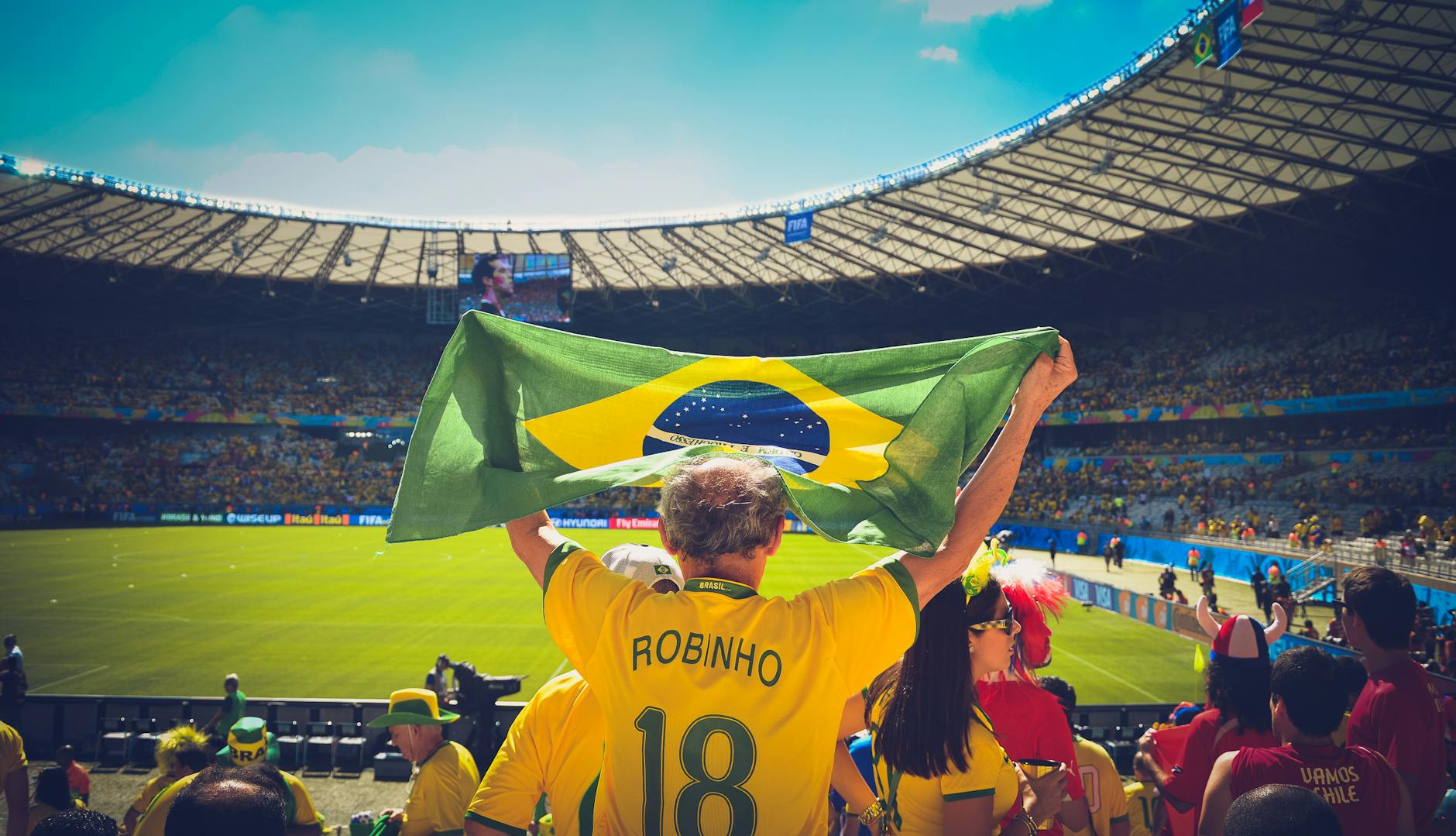
Photo by Caio on Pexels
How should you analyse the 2026 FIFA World Cup?
You should analyse the 2026 FIFA World Cup by combining squad availability, tactical fit, group-stage incentives, travel demands, and opponent-adjusted performance. Start with the official schedule, confirm venue and rest information, then update your assessment after line-ups and injury news rather than relying on pre-tournament reputation.
The 2026 tournament is unusually difficult to assess because it will involve 48 teams, 104 matches, three host countries, and a broader range of competitive levels. The United States, Mexico, and Canada will carry host expectations, while Argentina enter as the reigning champions from Qatar 2022. Brazil, France, Germany, Spain, England, Portugal, and the Netherlands will bring different blends of experience, youth, and tactical identity.
A disciplined workflow might be:
- Map the group: identify likely opponents, travel routes, and qualification thresholds.
- Audit the squad: record injuries, suspensions, minutes, backup quality, and goalkeeper options.
- Study the coach: note formation changes, substitution timing, and responses to setbacks.
- Compare styles: ask whether the team can handle pressing, low blocks, aerial play, and counters.
- Review set pieces: count both chances created and chances conceded.
- Reassess after each match: do not preserve an outdated pre-tournament opinion.
- Record uncertainty: distinguish high-confidence facts from informed estimates.
A specific example may help. Suppose Spain dominates possession against a compact opponent but creates only three central-box entries, while Portugal records fewer passes but produces repeated high-quality transitions. The better performance depends on the question being asked. If the next opponent defends deep, Spain’s control may be more relevant; if the opponent presses aggressively and leaves space, Portugal’s transition threat may matter more.
My first check-in for any 2026 contender will come after its second group match, not after the opening game. By then, we should know whether the coach has solved the main structural issue, whether the bench can maintain intensity, and whether the team’s preferred approach survives a different opponent. That timing also reduces the temptation to overreact to a single early result.
For deeper preparation, readers can use our [Internal Link: 2026 World Cup team profiles] and [Internal Link: match prediction methodology] before making their own notes.
Ready to follow the 2026 tournament with a more structured approach?
What can the FIFA World Cup teach us about football?
The FIFA World Cup teaches that elite football is shaped by adaptation, preparation, and narrow margins rather than reputation alone. Brazil’s five titles, Argentina’s three, Germany’s four, France’s 2018 championship, Morocco’s 2022 semi-final run, and Spain’s 2010 possession model all show different routes to success.
The tournament also teaches humility. A national team may have the best forward in the world and still lose because its midfield cannot protect the defence. A goalkeeper may become a hero after one penalty save, while an earlier positioning error disappears from public memory. A coach may look brilliant after a substitution works and foolish when the same decision fails by a few centimetres.
The historical record remains a useful guide:
- Uruguay won the inaugural 1930 tournament.
- Italy became the first team to retain the trophy, winning in 1934 and 1938.
- Brazil won three titles between 1958 and 1970.
- Germany won the 2014 final against Argentina in extra time.
- France won in 2018 before Argentina claimed the 2022 title.
- The 2026 tournament will be the first FIFA World Cup with 48 teams.
These facts provide context, not destiny. The 1958 Brazil team cannot be compared directly with the 2026 United States host environment, just as the 1970 tournament cannot be measured using modern pressing data. Historical comparison becomes useful only after accounting for rules, format, travel, preparation, squad selection, and tactical evolution.
For the next tournament, my practical recommendation is modest: build a shortlist, define the evidence you will use, and review it at the 14-day mark after the group stage begins. Remove any claim that cannot survive an opponent-quality check. It sounds rather dull, perhaps, but dull process is often what remains after the excitement has done its damage.
Frequently Asked Questions
Q: What is the FIFA World Cup?
A: The FIFA World Cup is the premier men’s international football tournament organised by FIFA, the sport’s global governing body. The first edition took place in Uruguay in 1930, and the competition reached 32 teams from France 1998 through Qatar 2022. The 2026 tournament in Canada, Mexico, and the United States will expand to 48 teams and 104 matches, making it the largest edition in the event’s history.
Q: How often is the FIFA World Cup held?
A: The FIFA World Cup is normally held every four years. The schedule has been interrupted only by exceptional circumstances, including the cancellation of the 1942 and 1946 tournaments during the Second World War. Qatar hosted the most recent edition in 2022, while Canada, Mexico, and the United States will host the next tournament in 2026.
Q: Which country has won the most FIFA World Cup titles?
A: Brazil has won the most FIFA World Cup titles, with five championships. Brazil won in 1958, 1962, 1970, 1994, and 2002, while Germany and Italy have each won four. Argentina became a three-time champion after winning in 1978, 1986, and 2022, and France have won twice, in 1998 and 2018.
Q: How does the 2026 FIFA World Cup format work?
A: The 2026 FIFA World Cup will feature 48 teams divided into 12 groups of four. The top two teams in each group and the eight best third-place teams will advance to a 32-team knockout stage, creating 104 matches overall. Canada, Mexico, and the United States will host games across 16 venues, so travel and recovery may become more important than in previous editions.
Q: How should I predict a FIFA World Cup match?
A: Predict a FIFA World Cup match by comparing team strength, tactical matchup, injuries, set pieces, defensive transitions, and opponent quality. Begin with recent competitive matches rather than friendlies, then check the confirmed line-ups and venue conditions before finalising your view. Keep a written record of the reason for each prediction so you can distinguish sound analysis from hindsight.
Q: Are FIFA World Cup penalty shootouts just luck?
A: FIFA World Cup penalty shootouts include randomness, but preparation significantly influences their outcome. Coaches can select reliable takers, practise under fatigue, study goalkeeper tendencies, and establish a clear order before a knockout match. Spain’s 2022 defeat to Morocco and Argentina’s victory over the Netherlands demonstrate how technique, selection, goalkeeper behaviour, and pressure management interact.
Q: Where can I follow FIFA World Cup predictions and team statistics?
A: You can follow FIFA World Cup predictions and team statistics through official FIFA information, reputable football data providers, and specialist analysis sites such as Fan Strategy. Check the definition and source of each statistic before relying on it, particularly for expected goals, possession, and player ratings. For any gambling-related decision, use regulated services where legal, set a fixed budget, and treat every forecast as uncertain.
The next practical action is to create a 2026 contender sheet containing each team’s defensive record, set-piece profile, injury list, travel path, and likely knockout route. Revisit that sheet after the second group match, then check it again at the 14-day mark rather than allowing one dramatic result to rewrite the entire tournament story.
Want to keep your World Cup research organised?
Thank you for reading.
Fan Strategy · Strategic Archive