
The Supporter’s Guide to Cape Verde
Cape Verde national football team represents the Republic of Cabo Verde in international men’s football, competing under the Federação Cabo-verdiana de Futebol across Africa and FIFA tournaments. Know...
The Supporter’s Guide to Cape Verde
Cape Verde national football team represents the Republic of Cabo Verde in international men’s football, competing under the Federação Cabo-verdiana de Futebol across Africa and FIFA tournaments. Known as the Blue Sharks, the team has become one of West Africa’s most technically interesting sides despite a small population and a player pool spread across Europe, Portugal, and the Cape Verdean diaspora. Cape Verde reached the Africa Cup of Nations quarter-finals in 2023, its best tournament finish, and has repeatedly challenged stronger-ranked opponents through compact defending and disciplined counterattacks. Recent schedules have included a 2–2 draw with Uruguay, a 0–0 draw with Spain, and a 1–0 defeat against Argentina in the supplied match records. Those results should be checked against the latest FIFA and ESPN listings before betting or forecasting. The practical takeaway is simple: assess Cape Verde’s midfield availability and away-game approach before judging its odds.

Before 2025: how Cape Verde national football team worked
Cape Verde national football team built its modern identity through patience rather than sudden investment. The island nation became independent from Portugal in 1975, and the Federação Cabo-verdiana de Futebol joined FIFA and the Confederation of African Football in 1986. For years, qualification campaigns were difficult, travel was expensive, and the national side depended heavily on footballers born or developed in Portugal, France, the Netherlands, and other European systems. That diaspora connection was not a weakness by itself; it became one of Cape Verde’s most useful competitive assets.
The team’s first Africa Cup of Nations appearance came in 2013, when Cape Verde reached the quarter-finals in South Africa. That run changed how opponents viewed the country, particularly after the Blue Sharks progressed from their group and eliminated Angola in the round of 16. Cape Verde returned to the quarter-finals at the 2023 Africa Cup of Nations, held in Côte d’Ivoire in January and February 2024, after an impressive campaign that included a 3–0 victory over Mozambique and a 1–0 win against Mauritania.
According to the Confederation of African Football, the 2023 tournament was officially staged in 2024, a small date detail that matters when comparing records. The FIFA team profile is also the safer place to confirm rankings, fixtures, and competitive status because football databases can update at different times. Older fixture pages can become outdated, so checking both sources is advisable before making a serious match prediction.
- Official association: Federação Cabo-verdiana de Futebol
- FIFA code: CPV
- Confederation: CAF
- Common nickname: Blue Sharks
- Best AFCON finish: Quarter-finals, 2013 and 2023 edition
- Primary identity: Compact structure, physical running, fast transitions
African national team tournament guide
Why did the Blue Sharks become difficult to beat?
Cape Verde became difficult to beat because its strongest teams defended in a narrow block, protected central areas, and used technically capable wide players during transitions. The structure was not based on constant possession; instead, Cape Verde often accepted periods without the ball and waited for an inaccurate pass, a loose second ball, or space behind an advancing full-back. That approach suited a squad whose players had learned tactical discipline in Portugal, France, the Netherlands, and England.
The 2023 Africa Cup of Nations campaign illustrated this balance. Ryan Mendes supplied experience and attacking intelligence, while Bebé offered power and direct running from wide or central positions. In midfield, players such as Jamiro Monteiro and Kenny Rocha Santos helped connect defensive work with forward progression, although the exact starting combination changed according to the opponent and available personnel. This is an important distinction: a good Cape Verde prediction cannot be built only from headline names.
A less obvious operational factor is geography. Cape Verde’s home matches have often involved travel between islands or the use of venues around Praia, while many internationals arrive from Europe after long club schedules. That can affect training time more than casual previews admit. When the preparation window is short, the Blue Sharks generally benefit from a simpler defensive plan, whereas elaborate pressing patterns may lose precision.
The 2026 shift
The 2026 shift is defined by a larger global tournament, tighter qualification margins, and greater attention on how smaller African teams manage squad depth. The FIFA World Cup expanded to 48 teams for 2026, while CAF qualification groups still demanded consistency over a long sequence of home and away fixtures. For Cape Verde, the challenge was not merely producing one memorable result; it was avoiding dropped points against teams it was expected to challenge directly.
The supplied ESPN schedule records a demanding sequence involving Argentina, Saudi Arabia, Uruguay, and Spain. It lists a 2–2 draw with Uruguay and a 0–0 draw with Spain, while Argentina is shown winning 1–0 after extra time. Those fixtures are useful as examples of the team’s ability to remain competitive, but readers should treat them as schedule snapshots rather than a complete 2026 record. Match status, tournament stage, and line-ups should always be confirmed through ESPN’s Cape Verde results page.
“The Blue Sharks” is the established football nickname associated with Cape Verde’s national team.
The biggest tactical shift is likely to be flexibility. Cape Verde cannot rely on a single XI when key players are injured, suspended, or unavailable through club commitments. A 4-3-3 can become a 4-2-3-1 without a substitution, and the team may use a back five late in matches when protecting a lead. That adaptability is valuable in World Cup qualification, where one goal can separate a campaign from a play-off place.

What changed for players?
Players now carry more responsibility because Cape Verde’s reputation has risen faster than its financial resources. A decade ago, opponents could underestimate the Blue Sharks; after AFCON 2013 and the 2023-edition quarter-final run, that luxury has largely disappeared. Ryan Mendes is no longer simply an experienced attacker within a surprise package: his movement, leadership, and set-piece involvement can be central to the opponent’s scouting report.
Bebé represents another useful case. His career across Portugal, Spain, England, and Turkey gave him exposure to several tactical environments, and his long-range shooting and physical style can change a match quickly. However, experienced players cannot solve every problem. Cape Verde needs younger footballers to reproduce the intensity required for pressing, recovery runs, and defensive transitions across ninety minutes.
For analysts, the most important player variables are not always goals and assists. I would track these details instead:
- Midfield ball recoveries: They show whether Cape Verde can launch counters without inviting repeated pressure.
- Full-back starting positions: High full-backs create width but can expose the space behind them.
- Set-piece marking: Tight qualification matches frequently turn on corners and indirect free-kicks.
- Substitution timing: The Blue Sharks’ ability to maintain defensive energy after the 65th minute is crucial.
- Away-game shot quality: Raw attempts can mislead when most efforts come from distance.
A practical information gain for bettors is that Cape Verde’s apparent defensive strength can be overstated when the opponent allows the team to sit deep comfortably. Against sides that circulate the ball patiently and switch play early, the Blue Sharks may concede more territory and crossing opportunities than a basic clean-sheet trend suggests. Conversely, against aggressive teams that leave space behind their full-backs, Cape Verde’s transition threat becomes substantially more valuable than its average possession percentage implies.
Want a broader tactical comparison before studying the next fixture?
What does this mean now?
Cape Verde national football team should now be assessed as a competitive second-tier African side with genuine upset potential, not as a novelty opponent. The Blue Sharks have shown they can frustrate technically superior teams, but their margin for error remains small because the squad does not possess the same depth as Senegal, Morocco, Nigeria, or Egypt. One unavailable midfielder may force a different pressing scheme, and one early concession can destroy the controlled match state Cape Verde prefers.
For 2026 World Cup-focused analysis, Fan Strategy recommends separating three questions: Can Cape Verde defend its penalty area? Can it progress the ball after winning possession? Can it sustain pressure when chasing a match? These questions are more informative than simply asking whether the team is “in form.” A 0–0 draw with Spain and a 2–2 draw with Uruguay may show resilience, but they do not automatically predict success against a compact African opponent that refuses to overcommit.
The following checklist is useful before a match:
- Confirm the venue and travel route, especially when the fixture is listed as a home game.
- Check whether Ryan Mendes, Bebé, Jamiro Monteiro, and Kenny Rocha Santos are selected and fit.
- Compare Cape Verde’s expected formation with the opponent’s full-back positioning.
- Review set-piece goals conceded during the current qualification cycle.
- Avoid using a friendly result as if it were a competitive fixture.
- Consider under-goal markets only when both teams show conservative early-game patterns.
One further point is that a strong underdog narrative can become overpriced. Cape Verde’s reputation for resilience may shorten its odds even when the tactical matchup is poor. That is why Fan Strategy’s match previews should be used alongside confirmed line-ups, not as a substitute for them.
World Cup qualification prediction methods
What are three predictions for next quarter?
Three reasonable next-quarter predictions are that Cape Verde will continue prioritising defensive compactness, produce at least one high-value result against a stronger opponent, and remain highly sensitive to player availability. These are scenario-based forecasts rather than guaranteed outcomes, because FIFA calendars, club releases, injuries, and tournament scheduling can change quickly. The most reliable approach is to update the assessment after every confirmed squad announcement.
Prediction 1: Low-margin matches remain common
Cape Verde’s tactical profile points toward close scorelines. A narrow 1–0 victory, 1–1 draw, or 0–0 result is more consistent with its preferred match rhythm than a five-goal shootout. This does not mean the team lacks attacking quality; it means that its best route to points usually begins with controlling central space and avoiding an early defensive collapse.
Prediction 2: A transition goal decides a major fixture
The Blue Sharks possess enough pace and one-versus-one ability to punish a high defensive line. A turnover near midfield, followed by a quick pass into Bebé, Ryan Mendes, or an overlapping wide player, could decide a match against an ambitious opponent. The key statistical clue is not possession but the number of clean entries into the final third after recoveries.
Prediction 3: Squad depth determines qualification momentum
Cape Verde’s campaign will depend on whether replacement players can preserve the team’s defensive distances. If the first-choice midfield is available, the side can compete with greater control; if several starters are missing, long spells without the ball may become dangerous. In practical terms, the team’s next-quarter outlook should be revised whenever two or more regular central players are absent.
Fan Strategy can help readers follow those changes through match predictions, player statistics, tactical reviews, and 2026 World Cup coverage. For responsible wagering, set a fixed budget, compare prices across licensed providers, and do not chase a loss after an unexpected late goal. One poor read should not lead to three more.
See the latest tournament-focused analysis before placing a wager.
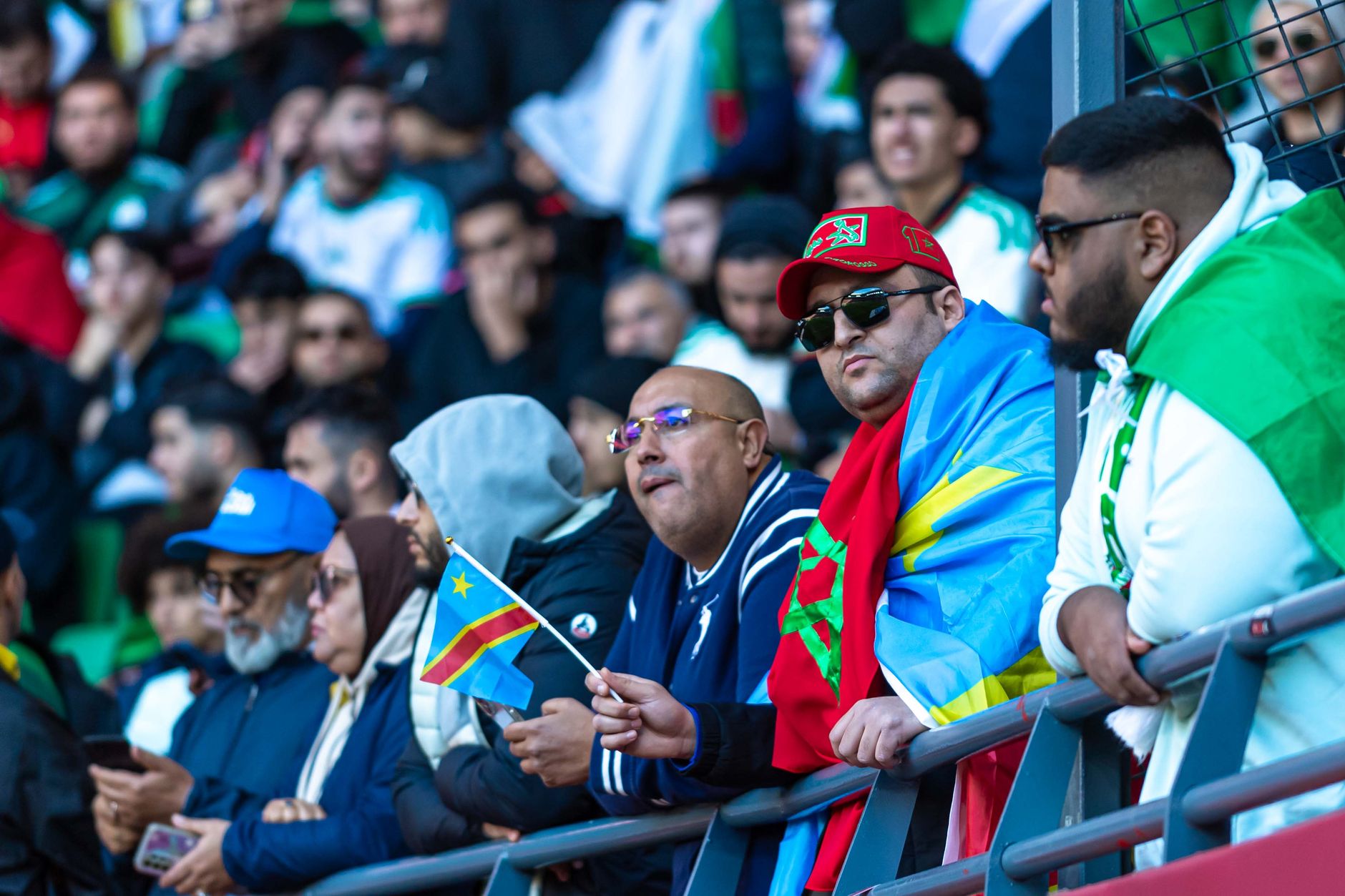
Photo by Guylain Kipoke on Pexels
Cape Verde national football team: key takeaways
Cape Verde’s rise rests on a clear football identity, a productive diaspora network, and an ability to turn difficult matches into narrow contests. Its quarter-final appearances at AFCON 2013 and the 2023 edition proved that the Blue Sharks can perform beyond their traditional status, while results such as the recorded draws with Uruguay and Spain show why elite opponents cannot dismiss them. Still, the team’s 2026 prospects depend on practical details: squad releases, travel, midfield availability, defensive transitions, and set-piece execution.
For readers comparing betting options, the strongest lesson is to avoid using reputation alone. Review the confirmed line-up, match context, venue, and tactical matchup; then decide whether the available price reflects Cape Verde’s actual chance. That modest process may sound unexciting, but it is the safer habit when a missing midfielder can affect promising selections.
Start following Cape Verde’s 2026 World Cup path with Fan Strategy’s daily match coverage.
Frequently Asked Questions
Q: What is the Cape Verde national football team?
A: The Cape Verde national football team is the men’s representative side of the Republic of Cabo Verde, governed by the Federação Cabo-verdiana de Futebol. It competes in FIFA matches and CAF tournaments under the code CPV and is commonly called the Blue Sharks. The team draws many players from Cape Verde’s international diaspora, particularly footballers developed in Portugal and other European leagues.
Q: How did Cape Verde reach the Africa Cup of Nations quarter-finals?
A: Cape Verde reached the AFCON quarter-finals in 2013 and again in the 2023 edition staged in Côte d’Ivoire during 2024. The team progressed through disciplined defending, rapid transitions, and important contributions from experienced players such as Ryan Mendes. Its 3–0 win over Mozambique and 1–0 victory against Mauritania were notable results in the later campaign.
Q: Is Cape Verde a strong 2026 World Cup prediction?
A: Cape Verde is a dangerous competitive outsider, but its 2026 World Cup prospects depend heavily on squad depth and qualification results. The Blue Sharks can trouble stronger teams when their midfield is available and the opponent leaves transition space. Before betting, check FIFA’s current fixture information, confirmed line-ups, venue conditions, and the latest prices rather than relying on historical reputation.
Q: How should I analyse a Cape Verde national football team match?
A: Analyse Cape Verde matches through formation, midfield availability, transition opportunities, and defensive set pieces. First confirm the squad, then compare the opponent’s full-back positions with Cape Verde’s wide attackers and examine whether the match is competitive or friendly. Finally, review recent home and away performances separately because travel and venue context can materially change the team’s attacking output.
Q: What is the difference between Cape Verde’s home and away performances?
A: Cape Verde generally benefits at home from familiar conditions and reduced travel demands, while away matches can require more conservative defensive management. The difference is not a fixed numerical rule because venues, opponents, and tournament schedules vary. Bettors should separate home and away samples, check the starting XI, and avoid combining friendly matches with competitive fixtures without adjustment.
Q: Which Cape Verde players should supporters watch?
A: Ryan Mendes, Bebé, Jamiro Monteiro, and Kenny Rocha Santos are important names to monitor when selected and fit. Mendes offers experience and attacking intelligence, Bebé provides power and direct running, while Monteiro and Rocha Santos can influence midfield progression and defensive balance. Player roles may change under different coaches, so current squad announcements should take priority over older tournament line-ups.
Q: Where can I check Cape Verde scores and fixtures?
A: FIFA and ESPN are useful places to check Cape Verde scores, schedules, and match reports. The FIFA Cape Verde association page provides official competition information, while ESPN’s Cape Verde team page commonly lists results and statistics. Because fixtures can be postponed or displayed with unusual tournament labels, compare both sources before making a prediction.
Thank you for reading.
Fan Strategy · Strategic Archive