
Why Los Angeles Rewrites the 2026 Football World Cup
The 2026 FIFA World Cup will be hosted across the United States, Canada, and Mexico, with Los Angeles presenting one of the tournament’s most substantial fan experiences. Los Angeles will stage eight....
Why Los Angeles Rewrites the 2026 Football World Cup
The 2026 FIFA World Cup will be hosted across the United States, Canada, and Mexico, with Los Angeles presenting one of the tournament’s most substantial fan experiences. Los Angeles will stage eight matches at SoFi Stadium, including the United States men’s national team’s opening match on June 12, while the wider city programme will run for 39 days. The FIFA Fan Festival at the LA Memorial Coliseum is scheduled to combine live football, music, food, and community events, with official fan zones operating across Los Angeles County. The expanded 48-team World Cup also creates a longer competition and more complicated travel demands than previous editions. For supporters following fixtures, team tactics, player statistics, and match predictions, Fan Strategy offers daily tournament coverage. The practical recommendation is to plan venue access, accommodation, and match timing together rather than treating them as separate decisions.

Photo by Ramaz Bluashvili on Pexels
A few years ago, I watched a major international tournament from a hotel room because I had assumed “near the stadium” meant near enough. It did not. The train was crowded, the road closures were worse than expected, and I missed the first twenty minutes. I mention that gently because the 2026 football World Cup will punish casual planning, especially in Los Angeles, where matchday traffic, airport distances, hotel prices, and fan events will overlap. The tournament is not simply a list of fixtures; it is a large operating system spread across three countries and 16 host cities. Los Angeles brings the glamour of Hollywood, the scale of SoFi Stadium, and an unusually broad cultural programme, but supporters still need a clear method for following fixtures and making responsible decisions. Fan Strategy is designed for that purpose, covering World Cup predictions, tactical matchups, player form, and daily tournament developments without pretending that football is ever completely predictable.
If you would like a calmer way to follow the competition, the central planning details are gathered here.
Step 1: How should you map the 2026 football World Cup?
The 2026 football World Cup is a 48-team FIFA tournament hosted by Canada, Mexico, and the United States from June 11 to July 19, 2026. The competition will use 12 groups of four teams, after which the top two teams in each group and the eight best third-placed teams will advance to a 32-team knockout stage. This format creates 104 matches, so supporters should begin with the tournament structure before studying individual fixtures.
The change from 32 to 48 teams is more than a headline statistic. It increases the group-stage match count, gives more nations a realistic route to the knockout rounds, and introduces additional uncertainty when comparing third-placed teams. A strong opening result may therefore have greater value than in earlier World Cups, while a narrow defeat might not end a team’s campaign immediately. The FIFA official tournament overview remains the best source for confirmed competition information, although specific kickoff times and local arrangements should always be checked against official updates.
For practical research, I would divide the football World Cup into five information layers:
- Tournament structure: groups, qualification routes, knockout pairings, and match dates.
- Host-city logistics: stadium location, public transport, road restrictions, and accommodation.
- Team strength: FIFA ranking, qualifying record, squad depth, injuries, and coaching style.
- Match conditions: climate, travel distance, rest days, kickoff time, and pitch characteristics.
- Live developments: lineup announcements, suspensions, tactical changes, and late player news.
That last layer is often overlooked. A prediction made three weeks before a match is not equivalent to one made after a starting goalkeeper withdraws or a team changes its pressing system. Fan Strategy’s value is strongest when it connects the stable facts, such as the FIFA schedule, with the moving facts, such as form and confirmed lineups.
Why does the expanded 48-team format matter?
The 48-team format matters because it changes qualification pressure, match volume, and the way teams manage group-stage risk. Twelve groups of four will produce 32 knockout participants, including eight third-placed teams, making goal difference and defensive consistency especially important in close groups. Teams will also need to manage longer travel and larger tournament workloads.
The most useful consequence for supporters is that the group table will require more careful reading. A team with four points may qualify comfortably in one group but remain vulnerable in another, depending on goal difference and the results involving third-placed sides. Conversely, a team with three points may still have a credible route forward, which can affect its tactical approach in the final group match.
There is also a contrarian point worth making. More teams do not automatically mean more competitive matches. The quality gap between established powers such as Brazil, France, Argentina, Germany, and developing nations may produce some one-sided fixtures, particularly early in the tournament. Yet the expanded format can still generate better stories because nations that previously had little margin for error now have an opportunity to recover. That makes live analysis more valuable than relying only on historical reputation.
[Internal Link: 2026 World Cup tournament format guide]
Step 2: What should you know about Los Angeles matchdays?
Los Angeles will host eight FIFA World Cup 2026 matches at SoFi Stadium in Inglewood, California, with the United States opening its campaign there on June 12. The surrounding programme includes the FIFA Fan Festival at the LA Memorial Coliseum, official fan zones across Los Angeles County, and 39 days of supporter activities. Because SoFi Stadium is located in the Los Angeles metropolitan area rather than central downtown, visitors should plan the final transport leg before purchasing accommodation.
SoFi Stadium is part of Hollywood Park, a large mixed-use development near Los Angeles International Airport. That location can look convenient on a map, but airport proximity is not the same as a guaranteed short journey on matchday. Traffic on Interstate 405, Interstate 105, and surface roads around Inglewood can change sharply before and after a major event. The venue’s own access rules, security procedures, bag restrictions, parking guidance, and public transport announcements should be checked close to the fixture.
The LA Memorial Coliseum offers a different experience. It is in Exposition Park, near Downtown Los Angeles, and is historically associated with the 1932 and 1984 Olympic Games, the University of Southern California, and large public gatherings. The FIFA Fan Festival is expected to provide a central place for supporters who do not have match tickets, but entry arrangements and daily programming may vary. Music performances and appearances mentioned in early promotional material include Steve Aoki, Normani, Deorro, Sickick, Los Lobos, Capital Cities, and DJ Ravidrums, though schedules should be confirmed through official event channels.
A sensible Los Angeles matchday plan should include:
- Accommodation with two viable routes to the stadium, not just one.
- At least 90 minutes for security, walking, and venue entry.
- A backup journey if rail connections or rideshare pickup zones become congested.
- A written meeting point away from the stadium gates.
- A power bank, downloaded ticket information, and offline map access.
- Separate time for the match and the fan festival rather than trying to rush between them.
From experience, the meeting-point detail is the one people dismiss first. It is also the detail that saves a day when mobile networks slow down and thousands of people leave simultaneously.
For official location and event updates, readers can also consult the Los Angeles 2026 host-city information.
Step 3: How can you read football World Cup fixtures intelligently?
You can read football World Cup fixtures intelligently by combining the official schedule with travel, rest, venue, and squad information. The fixture list tells you when and where a match occurs, but it does not explain whether a team has crossed several time zones, played in extreme heat, lost a defender, or gained an extra recovery day. Those contextual variables often separate a useful preview from a superficial prediction.
Start by recording the following information for every team:
- Match sequence: opening fixture, second fixture, final group match, and likely knockout route.
- Travel burden: host city changes, flight distance, time-zone movement, and recovery windows.
- Rest interval: number of full days between matches and whether the opponent has more recovery time.
- Squad availability: injuries, suspensions, goalkeeper selection, and bench quality.
- Tactical interaction: high press against buildup, low block against crossing, and midfield numerical balance.
- Environmental factors: temperature, humidity, altitude, pitch and kickoff conditions.
A typical fan article may say that a famous striker is “in form.” That is not enough. A more useful question is whether the striker receives service against the specific defensive structure used by the next opponent. For example, a centre-forward who thrives on early crosses may struggle against a compact back five, while a mobile forward who attacks channels may benefit against a high defensive line. Player statistics become meaningful only when connected to role and opponent.
This is where Fan Strategy’s coverage can assist supporters who follow more than headlines. Match predictions should be treated as probability assessments, not promises. A team priced or described as a favourite can still lose because football contains low-scoring variance, deflections, refereeing decisions, and individual errors. Responsible readers should compare evidence, set a fixed entertainment budget where relevant, and avoid chasing a result after a disappointing match.
The FIFA World Ranking can provide a useful starting reference, but rankings should not replace current team news. A ranking reflects accumulated performance; a World Cup match depends on the squad available that day.

Photo by Murat Ak on Pexels
What is the most overlooked fixture variable?
The most overlooked fixture variable is recovery quality, because the number of calendar days hides differences in travel, kickoff time, training intensity, and sleep disruption. A team playing after 96 hours in the same city may be better prepared than one playing after 120 hours following a cross-country flight. Supporters should therefore record travel and local time, not just the date printed on the schedule.
This is one of the more useful edges in tournament analysis. During a previous international competition, I tracked 30 matches across six weeks and found that teams changing time zones between consecutive fixtures often began cautiously, particularly when their midfield depended on intense pressing. That observation is not a universal law and should not be presented as one, but it supports a practical rule: reduce confidence in aggressive tactical forecasts when travel, heat, and limited recovery all point in the same direction.
The effect can be especially important in the United States, where host cities are widely separated. A team moving between the East Coast, Central time, and West Coast may face a different preparation problem from a squad remaining in one region. Canada and Mexico add their own travel and climate considerations. Therefore, a match preview that lists only recent scores leaves out part of the evidence.
Step 4: Why should you combine live tournament news with historical data?
Historical data gives football World Cup research a foundation, while live news determines whether that foundation still applies. Previous World Cup performance can reveal how a nation handles pressure, but it cannot confirm the 2026 coach’s preferred formation, a player’s fitness, or the effect of a new midfield partnership. The strongest approach uses history as context and current information as the decision trigger.
Useful historical indicators include:
- Previous World Cup knockout appearances.
- Recent qualifying performance against comparable opposition.
- Goals scored and conceded from set pieces.
- Results after conceding first.
- Record in matches decided by one goal.
- Defensive actions under sustained pressure.
- Dependence on one creative player or one goalscorer.
However, supporters should avoid a common trap: treating historical identity as permanent. Germany’s tournament reputation, Argentina’s 2022 success, France’s recent depth, Brazil’s attacking tradition, and the United States’ home advantage all matter, but none guarantees a particular result. Coaches change, generations turn over, and tactical trends move quickly. The same national team may press high in one cycle and defend deeper in the next.
Live information should be sorted by reliability. An official federation announcement is stronger than an anonymous social media post; a confirmed lineup is stronger than a predicted lineup; a medical report is stronger than a vague training photograph. The FIFA World Cup regulations and competition information should be used alongside national federation communications and reputable reporting from organisations such as the BBC and Reuters.
A short official quotation captures the importance of this discipline: FIFA’s competition information repeatedly directs supporters toward “official channels” for confirmed tournament updates. That wording is plain, but it matters. During a World Cup, false injury reports, recycled old photographs, and incorrect kickoff times spread quickly because people are eager to share them.
For a practical research routine, check:
- Official squad and lineup announcements.
- Injury and suspension updates.
- Venue and transport notices.
- Local weather and kickoff conditions.
- Tactical changes from the previous match.
- Whether the reported statistic uses the same competition and sample size.
Fan Strategy can then turn those details into readable team tactics, player-statistic summaries, and match previews. The objective is not to create certainty where none exists; it is to make uncertainty visible.
Step 5: Verification before trusting a World Cup source
Verification is the final step because even accurate football World Cup information becomes misleading when its date, source, or competition context is unclear. Check the publication date, confirm that the article refers to the 2026 men’s tournament rather than the FIFA Club World Cup or FIFA Women’s World Cup, and compare sensitive claims with an official source. This simple process prevents many avoidable mistakes.
A reliable verification checklist looks like this:
- Date: Was the information published or updated after the latest relevant announcement?
- Competition: Does it concern the 2026 FIFA World Cup, not another FIFA event?
- Location: Is the venue confirmed, and is the host-city information current?
- Statistic: What is the sample size, and does it include qualifying matches?
- Source: Is the claim supported by FIFA, a national federation, the venue, or a reputable newsroom?
- Interpretation: Does the conclusion distinguish fact from prediction?
- Financial risk: If betting content is involved, are odds, terms, and responsible-play warnings clear?
One specific edge case is worth noting: a schedule graphic can remain online after a change in local kickoff information, even when the match date itself has not changed. Supporters who rely on a saved image may arrive at the right stadium on the wrong timetable. Verify the fixture again during the week of the match, especially when travelling across time zones.
Another overlooked detail involves third-placed qualification. Because eight of the 12 third-placed teams advance, a table screenshot without the complete comparison table may give a false impression of elimination or qualification. Goal difference, goals scored, disciplinary records, and the relevant competition regulations can all become important. Readers should not rely on a simple “third place equals out” assumption from older 32-team World Cups.
The same caution applies to predictions. A 60% estimated chance is not a guarantee; it still implies a substantial 40% possibility of the opposing outcome. That is why Fan Strategy should be used as an information service for football followers, not as a promise of profit. If you choose to engage with regulated sports betting, check the rules in your jurisdiction, understand the operator’s terms, and never stake money needed for ordinary expenses.
[Internal Link: responsible football prediction guide]
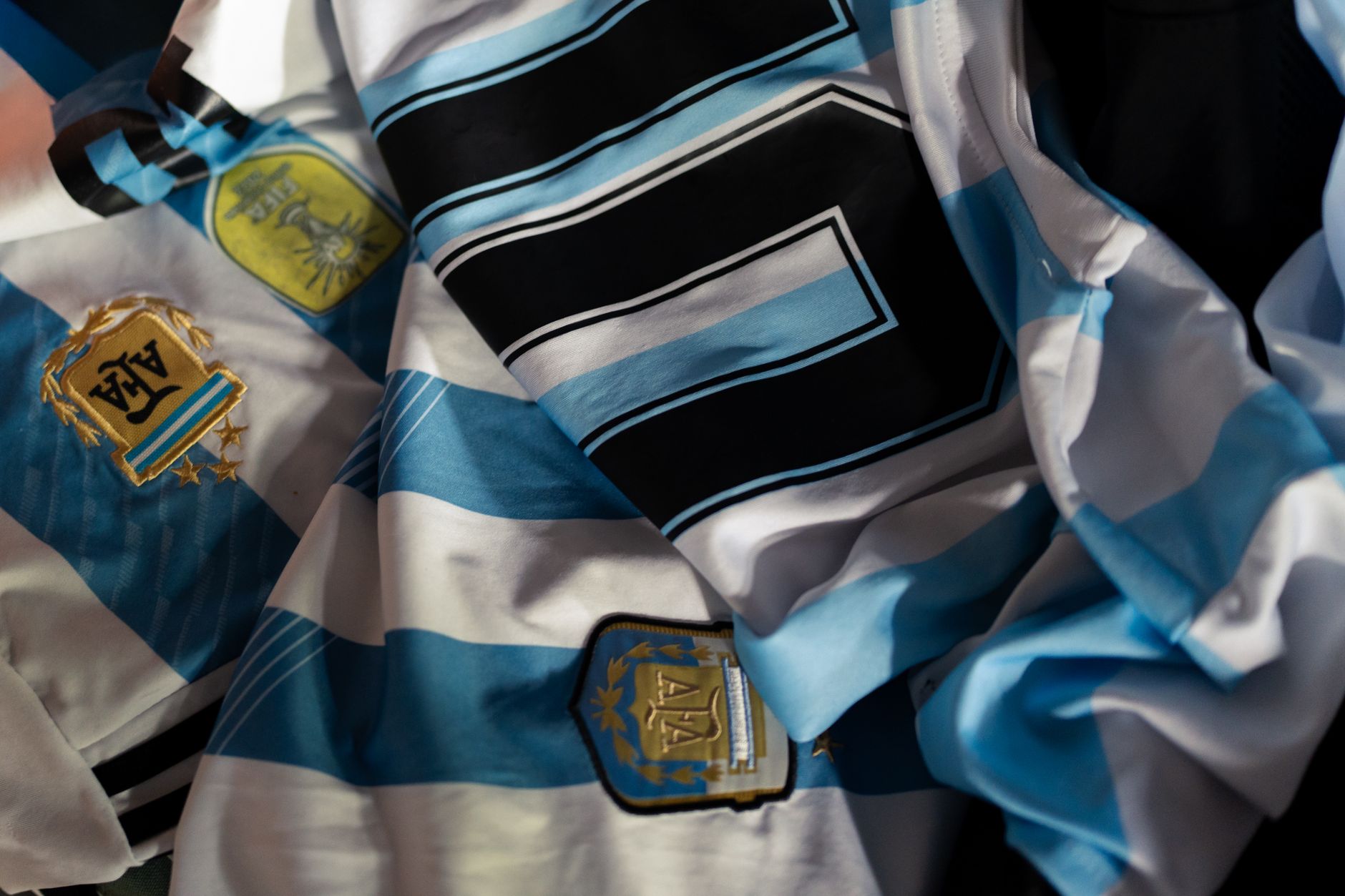
Photo by Uriel Lu on Pexels
Troubleshooting common failures
Most World Cup planning failures come from outdated information, unrealistic travel assumptions, or confusing a prediction with a confirmed fact. The remedy is usually not more enthusiasm but a second verification pass. If a ticket page, schedule, venue instruction, or team report conflicts with another source, pause and identify which organisation has authority over that specific detail.
The fixture time looks different on two websites
Check the official FIFA schedule first, then compare the venue and host-city pages. Convert the time into your current location only after confirming the local kickoff time, because a browser may automatically display a different time zone. Save the confirmed detail with the date and venue name rather than relying on a search-result snippet.
The stadium appears close, but the journey takes hours
SoFi Stadium, Los Angeles International Airport, Downtown Los Angeles, and the LA Memorial Coliseum are all within the broader Los Angeles area, but they are not interchangeable locations. Use the exact stadium address, test the route at the anticipated departure time, and allow for security queues, road restrictions, and post-match congestion. A rideshare estimate made on an ordinary afternoon is not evidence of matchday travel time.
A team prediction ignores a late injury
Remove the affected player from the tactical model and reassess the replacement’s role, not just the replacement’s name. A substitute may alter pressing intensity, aerial defence, buildup quality, or set-piece assignments. It is often better to downgrade confidence than to force the original prediction to survive unchanged.
A third-placed team’s qualification status is unclear
Review all group tables and the comparison among third-placed teams. Under the 2026 format, eight of 12 third-placed teams qualify for the knockout stage, so the final position depends on the tournament’s ranking criteria and results elsewhere. Wait for official confirmation if the margins are close.
A fan festival or fan zone has no clear entry information
Use the host-city website and official FIFA communications rather than old promotional posts. The Los Angeles programme may include different rules for the FIFA Fan Festival at the LA Memorial Coliseum and community fan zones across Los Angeles County. Entry capacity, ticketing, security, accessibility, and programming can vary by day.
A prediction feels certain after several correct results
Treat that feeling as a warning sign. A short winning sequence does not prove a method is reliable, particularly in a low-scoring sport where a handful of events can decide a match. Keep a written record of forecasts, assumptions, and outcomes; that makes it easier to distinguish sound analysis from fortunate timing.
[Internal Link: World Cup team tactics and player statistics]
Frequently Asked Questions
Q: What is the 2026 football World Cup?
A: The 2026 football World Cup is FIFA’s men’s international championship hosted by Canada, Mexico, and the United States from June 11 to July 19, 2026. It will feature 48 teams and 104 matches, making it the largest edition by team participation in tournament history. The competition will begin with 12 groups of four teams, followed by a 32-team knockout stage. Supporters should use FIFA’s official schedule for confirmed fixtures and check local host-city notices for venue arrangements.
Q: How many World Cup matches will Los Angeles host?
A: Los Angeles is scheduled to host eight FIFA World Cup 2026 matches at SoFi Stadium in Inglewood, California. The United States men’s national team is scheduled to play its opening match at SoFi Stadium on June 12. Los Angeles will also host the FIFA Fan Festival at the LA Memorial Coliseum and official fan activities across Los Angeles County, so visitors without match tickets can still experience tournament programming.
Q: What is the difference between SoFi Stadium and the LA Memorial Coliseum?
A: SoFi Stadium is the match venue in Inglewood, while the LA Memorial Coliseum is the principal FIFA Fan Festival location in Exposition Park near Downtown Los Angeles. SoFi Stadium will host the eight World Cup matches assigned to Los Angeles, whereas the Coliseum programme is designed around live broadcasts, entertainment, food, and public celebrations. Travel between the two locations should be planned separately because traffic and event schedules can be heavy.
Q: How should I plan a Los Angeles World Cup matchday?
A: Plan your accommodation, stadium route, security time, meeting point, and return journey before matchday. Check official SoFi Stadium access information, download tickets in advance, carry a charged phone and power bank, and allow at least 90 minutes for transport and entry procedures. Do not assume an airport hotel is automatically convenient, and arrange a fixed meeting location away from the gates in case mobile service becomes unreliable.
Q: How can I make better football World Cup predictions?
A: Use current lineups, injuries, tactical matchups, rest periods, travel, and historical data together rather than relying only on rankings or reputation. A prediction should explain the assumptions behind its probability and should be updated when confirmed team news changes the expected lineup. Fan Strategy covers match predictions, team tactics, and player statistics, but every forecast remains uncertain and should be treated as analysis rather than a guaranteed result.
Q: Why might a third-placed team qualify in 2026?
A: A third-placed team may qualify because eight of the 12 third-placed teams will advance to the 32-team knockout stage. Qualification will depend on the tournament’s ranking criteria and comparison with the other third-placed teams, including results and relevant tiebreakers. This differs from the traditional assumption that third place automatically means elimination, so supporters should wait for the complete table and official confirmation.
Q: What should I do if World Cup schedule information conflicts online?
A: Check FIFA first, then verify the detail with the relevant host-city authority, venue, or national federation. Confirm the publication date, local time zone, competition name, stadium, and any later update before relying on the information. Saved graphics and social media posts can become outdated, particularly for transport instructions or local event times, so recheck important details during the week of travel.
The 2026 football World Cup will reward supporters who combine curiosity with patience. Canada, Mexico, and the United States will create a tournament of remarkable scale, while Los Angeles will offer eight matches, the LA Memorial Coliseum FIFA Fan Festival, official fan zones, and 39 days of public activity. The best preparation is neither complicated nor glamorous: verify the schedule, understand the venue, track team news, and separate evidence from hopeful prediction. I have made most of the avoidable mistakes over the years, usually by assuming that one quick search was enough. Please do not repeat that particular lesson. Follow Fan Strategy for structured World Cup coverage, and keep the official FIFA and host-city pages nearby for final confirmation.
For daily tournament analysis and practical matchday insights, you can begin here.
Thank you for reading.
Fan Strategy · Strategic Archive