
2026 VAR: 7 Referee Insights
Video Assistant Referee (VAR) is a football match-official system that checks goal, penalty, direct-red-card, and mistaken-identity decisions for clear and obvious errors or serious missed incidents.....
2026 VAR: 7 Referee Insights
Video Assistant Referee (VAR) is a football match-official system that checks goal, penalty, direct-red-card, and mistaken-identity decisions for clear and obvious errors or serious missed incidents. Used under the International Football Association Board (IFAB) protocol and approved by FIFA, VAR operates from a video operation room with multiple broadcast camera angles, while the on-field referee remains responsible for the final decision. In 2026 competitions, the process can involve offside technology, calibrated lines, slow motion, and real-time communication between the VAR and referee. VAR does not review every foul or replace the referee; it automatically checks relevant incidents and intervenes only within its defined categories. For a match viewer, the practical rule is simple: watch for the review signal, understand that “check complete” may require no stoppage, and judge the process against the four permitted review areas rather than every controversial moment.
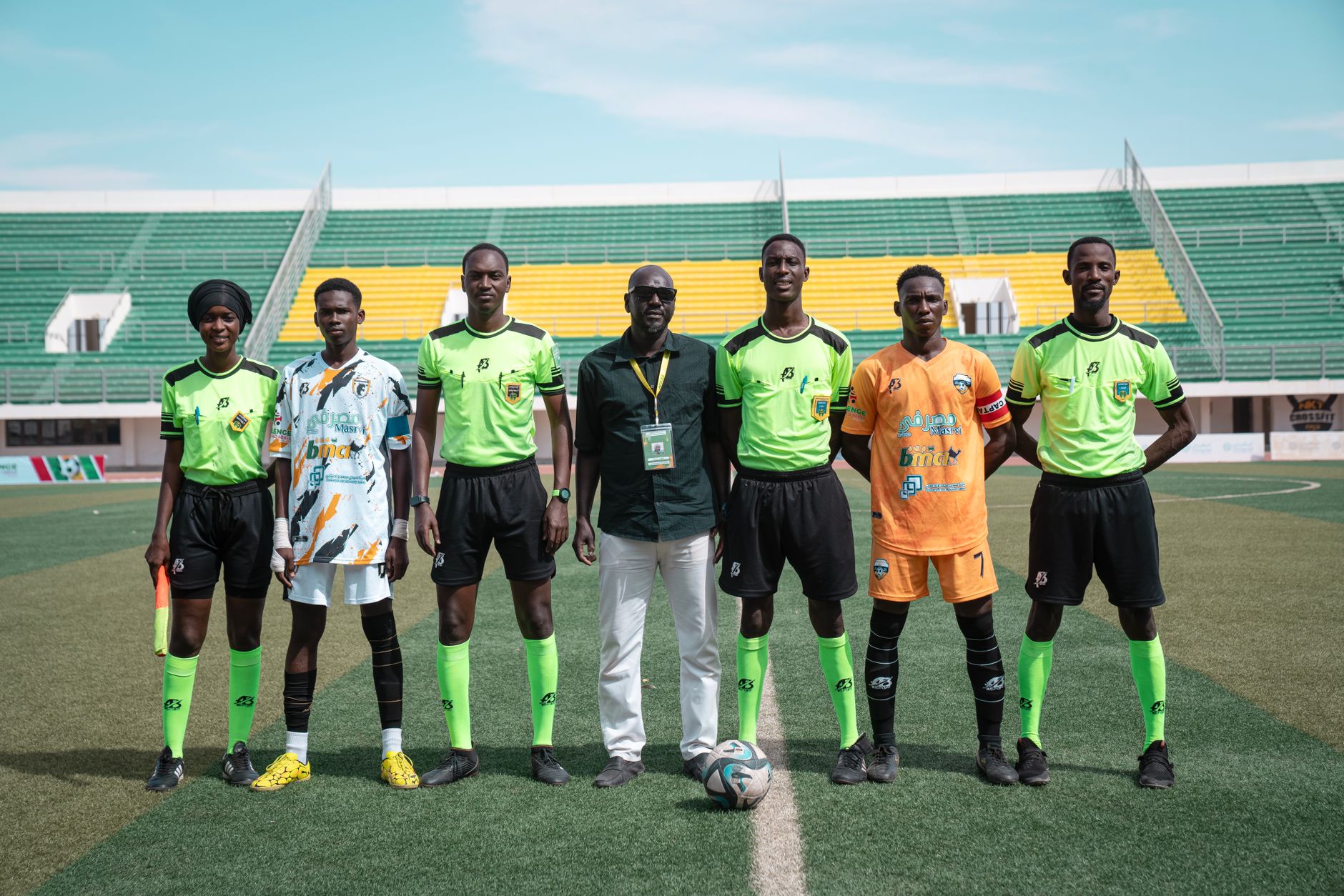
Photo by Ben Khatry on Pexels
The most revealing VAR moment I remember was not a dramatic penalty overturn. It was a goal that looked perfectly ordinary from the stands, followed by nearly two minutes of quiet uncertainty. The striker celebrated, the defenders protested, and nobody in the stadium knew whether the decision had already been checked. I have watched enough football over the years to know that these pauses feel longer after a bad result, especially when one decision ruins a prediction or changes the entire shape of a match.
For readers following the FIFA World Cup 2026, UEFA competitions, domestic leagues, or the daily analysis published by Fan Strategy, understanding how VAR works is more useful than simply asking whether it is “good” or “bad.” The system is not a second referee with unlimited authority. It is a restricted safety net, built around a high intervention threshold, defined review categories, and the principle that the original on-field decision should stand unless video evidence demonstrates a clear and obvious error.
Before 2025: how VAR worked
Before 2025, how did VAR work in football? VAR followed the same core IFAB model: the video assistant automatically checked every potentially reviewable incident, but could recommend intervention only for a clear and obvious error or serious missed incident involving a goal, penalty, direct red card, or mistaken identity. The on-field referee always made the final decision.
The system developed gradually rather than arriving fully formed. FIFA tested video assistance through experimental competitions before VAR became part of major tournaments, and the 2018 FIFA World Cup made the technology familiar to a worldwide audience. Since then, FIFA, UEFA, the Premier League, Bundesliga, Serie A, La Liga, and numerous national associations have adapted the basic framework to their own competition operations.
The key distinction is between a check and a review:
- A check is the silent background assessment performed by the VAR team.
- A review occurs when the referee changes a decision after receiving information from the VAR or personally examines footage.
- An on-field review (OFR) requires the referee to look at a pitch-side monitor.
- A VAR-only review can support a factual correction, especially for some offside or boundary decisions, where interpretation is limited.
This difference explains why television viewers sometimes see a “VAR check” graphic without a long stoppage. The VAR may confirm the original decision quickly, or the footage may reveal no intervention-worthy error. According to the IFAB Video Assistant Referee protocol, “the referee must always make a decision”; VAR cannot be used as a substitute for making an initial call.
What decisions could VAR review?
VAR review in football is limited to four principal categories, although an incident may contain several connected questions. For example, a goal may involve an offside position, a handball, a foul in the build-up, and the exact moment at which the ball crossed the line.
Goal or no goal
VAR may check whether the attacking team committed an offence before scoring, whether the ball crossed the line, or whether the goal should be disallowed for offside, handball, or a foul.Penalty or no penalty
The team receiving or conceding a penalty can be affected by a review of the location, the nature of contact, handball, simulation, or an overlooked defensive offence.Direct red card incidents
VAR may intervene when a player appears to deserve a direct sending-off for serious foul play, violent conduct, spitting, biting, or another qualifying offence. A clearly incorrect second yellow card is not normally a VAR category.Mistaken identity
If the referee cautions or dismisses the wrong player, VAR can help identify the actual offender. This is especially important during crowded confrontations.
The protocol does not create a general “important moment” category. A missed corner, ordinary throw-in, routine yellow card, or incorrect free-kick decision is not automatically reviewable merely because it later leads to danger. That limitation is frustrating, but without it every stoppage could become a courtroom hearing.
[Internal Link: FIFA World Cup 2026 match predictions]
How did the technology operate?
A typical VAR setup used several high-definition broadcast cameras, replay servers, communication equipment, calibrated offside tools, and specialist operators. The camera count differed by stadium and competition, and not every angle was equally useful. A camera behind the goal might clarify goalkeeper movement, while a touchline angle could be essential for a foul or offside line.
The VAR team normally included:
- The VAR, who is the lead video match official.
- The assistant VAR (AVAR), who helps monitor other angles, live play, and communication.
- Replay operators, who locate and prepare relevant footage.
- A trained technical team responsible for the video feed, synchronisation, and display systems.
The VAR does not simply watch the same broadcast that fans see. The official system gives access to available match footage, including slow motion and different angles. However, “more cameras” does not mean “perfect evidence.” A body part may be hidden, a camera may be poorly aligned, or the exact contact may remain ambiguous.
This is one of the less comfortable lessons from years of watching VAR: technology can reduce uncertainty, but it cannot eliminate interpretation. A frame may show that a defender touched an attacker, yet it cannot by itself decide whether the contact was careless, reckless, or normal football action. That final judgement remains governed by the Laws of the Game.
The 2026 shift
What changed for VAR in 2026? The largest shift is not a single universal rule but the wider use of faster decision support, improved offside technology, clearer stadium communication, and competition-specific operating procedures. FIFA World Cup 2026 matches in Canada, Mexico, and the United States will place enormous operational pressure on officials because the tournament spans 16 host cities and uses large venues, different broadcast environments, and intense global attention.
The underlying IFAB principles remain important. FIFA and competition organisers must satisfy implementation requirements and obtain the necessary approval before using VAR. The protocol still says that only the referee initiates a formal review, while the VAR recommends one. The referee also remains visible during an on-field review, and players are not permitted to surround officials or attempt to influence the process.
The 2026 viewing experience may feel quicker because technology can resolve some factual decisions with less deliberation. Semi-automated offside technology, where implemented, uses player tracking and ball data to assist officials in identifying the relevant kick point and offside position. It does not decide every interference question automatically. A human referee must still assess whether an offside-positioned player interfered with an opponent or gained an advantage under the Laws of the Game.
Why does VAR sometimes take so long?
VAR delays usually occur because the incident contains several separate judgements, not because the officials are simply replaying the same image unnecessarily. A penalty review may require the team to establish where contact occurred, whether contact happened, whether the defender played the ball, whether the attacker initiated the challenge, and whether the action meets the threshold for an offence.
The most time-consuming cases commonly involve:
- Determining the precise point of contact.
- Establishing whether a player was offside at the moment of the pass.
- Checking a possible offence in the attacking phase before a goal.
- Deciding whether handball was deliberate or created an unfair advantage.
- Separating a normal challenge from serious foul play.
- Finding the correct player in a crowded confrontation.
- Confirming whether the original decision was factual or interpretive.
The protocol sets no fixed maximum time for a review because accuracy is prioritised over speed. That does not mean officials may review anything indefinitely. The review remains limited by the incident, the Laws of the Game, available footage, and the point at which play has restarted.
One contrarian point is worth making: a longer review does not necessarily indicate a worse VAR performance. In some incidents, a long delay shows that the officials are distinguishing a factual question from a subjective one. Conversely, a very fast decision can be wrong if the relevant angle was never properly examined. The better measure is whether the process followed the correct category and evidence threshold, not whether it finished in 20 seconds.

Photo by El gringo photo on Pexels
What happens during a VAR review?
The VAR process usually follows a sequence that viewers can understand, even when the broadcast does not show every stage:
The referee makes an initial decision.
Play continues or stops according to the referee’s judgement. VAR cannot manufacture a decision from nothing.The VAR checks the incident.
The VAR and AVAR review the available angles and determine whether the event falls into a reviewable category.The VAR communicates a recommendation.
If there appears to be a clear and obvious error or serious missed incident, the VAR explains the issue to the referee.The referee decides the review method.
For a factual matter, the referee may accept the information. For a subjective matter, the referee may conduct an on-field review.The referee makes the final decision.
The referee may keep the original call, overturn it, award a penalty, cancel a goal, issue a card, or correct the player’s identity.Play restarts under the Laws of the Game.
The restart depends on the final decision and the nature of the incident.
The referee is not required to follow the VAR recommendation. This matters because VAR is an assistant, not an appellate court. If the referee watches the replay and believes the original decision was not clearly wrong, the original call can remain in place.
Case study: the 2018 FIFA World Cup final
The 2018 FIFA World Cup final between France and Croatia provides a useful numerical example of VAR’s effect on a major match. France won 4–2 in Moscow, and one of France’s goals came from a penalty after a review of Ivan Perišić’s handball. The referee, Néstor Pitana, consulted the pitch-side monitor before awarding the penalty, which Antoine Griezmann converted.
The case demonstrates three practical points. First, VAR can review a penalty decision even when the initial incident is difficult to judge in real time. Second, the referee remains responsible for the final interpretation. Third, a review can have a direct statistical consequence: a penalty changes expected goals, match state, tactical behaviour, and often the market’s assessment of the likely result.
The official FIFA Laws of the Game resources and IFAB guidance should be used when checking current terminology, because public descriptions of handball have changed over time. A common mistake in match analysis is to apply a later handball interpretation to an earlier tournament, or to assume that every accidental arm contact must produce a penalty.
Want to follow more evidence-based tournament analysis? Fan Strategy tracks referee decisions, tactical context, player statistics, and World Cup match developments rather than treating every VAR interruption as proof of bias.
What changed for players?
How does VAR change what players do on the pitch? Players must now manage the possibility that an apparently finished incident can be reviewed, while also avoiding behaviour that creates a separate disciplinary problem. Attackers may continue celebrating cautiously, defenders may delay protests, and goalkeepers must understand that encroachment or positioning can be examined in penalty situations.
The most important player-level effects include:
- More disciplined celebrations: A player who removes a shirt after scoring may still receive a caution even if VAR later disallows the goal.
- Greater awareness of the reviewable window: A foul before a goal can matter even when several passes occur afterward.
- More careful confrontation management: Surrounding the referee can produce cautions and does not improve the review.
- Increased importance of body positioning: Offside, handball, and penalty incidents can depend on a shoulder, knee, boot, or arm position.
- More pressure on defenders: A challenge that was previously judged in real time may be reassessed if it meets the direct-red-card threshold.
A second non-obvious insight is that VAR has changed behaviour even when no review occurs. Players know that cameras are present, so some attackers exaggerate contact and some defenders avoid borderline tackles. This behavioural effect is difficult to measure from the final review log, but it can influence match tempo, penalty-area risk, and the number of contested challenges.
VAR also creates a strategic problem for coaches. If a team scores from a move that began with a possible foul 25 seconds earlier, players cannot know whether celebrating immediately is wise. Yet excessive hesitation can reduce emotional momentum. Elite teams therefore prepare players for both outcomes: celebrate, reset quickly, and avoid conduct that creates an additional card.
Case study: Aston Villa and the 2020 goal-line incident
A widely discussed Premier League example occurred in the 2019–20 season when Aston Villa played Sheffield United. A shot by Sheffield United goalkeeper Dean Henderson’s team crossed the goal line, but the goal was not awarded because the goal-line technology failed to detect the ball crossing. VAR did not overturn the decision because the relevant system did not provide usable confirmation.
The outcome was Aston Villa 0–0 Sheffield United. The incident is important because it shows a boundary of VAR: video assistance is not a magic replacement for every technical system, and the VAR can only work with the evidence and technology available. It also demonstrates why operational resilience matters. A competition may have multiple cameras and a VAR room, yet a failure in goal-line technology can still produce an uncorrected result.
For analysts and bettors, this case carries a practical warning. Do not treat “VAR available” as equivalent to “every factual error will be corrected.” Check the competition’s technology rules, camera coverage, and any public reports about system failures. A match prediction based on assumed perfect review capability is still exposed to infrastructure risk.
[Internal Link: football referee decisions and match rules]
How should players respond to VAR decisions?
Players should respond by accepting the review signal, moving away from the referee, and preparing for either restart. The captain can ask for an explanation politely, but surrounding the referee or gesturing aggressively may lead to a caution. The technical area must follow the competition’s disciplinary instructions as well.
The best practical routine is simple:
- Move outside the referee’s immediate space.
- Avoid touching or crowding the official.
- Keep track of the likely restart.
- Prepare tactically for both the original and revised decision.
- Do not commit a separate offence while waiting.
This is not merely etiquette. A review can last long enough for a team to lose concentration, concede emotional control, or fail to organise its defensive shape. The strongest sides use the pause to communicate: who marks the near post, whether the line steps up, which substitutes may enter, and whether the team needs to change its pressing trigger.
What this means now
What does VAR mean for football fans and match analysis now? It means that a final score cannot always be understood from the visible sequence alone. Analysts must separate the original decision, the reviewable category, the final ruling, the restart, and any downstream tactical effects. A goal cancelled for offside is not the same as a penalty overturned for simulation, even though both appear as “VAR decisions” in a match report.
For supporters and readers of Fan Strategy, the most useful checklist is:
| Question | Why it matters |
|---|---|
| What was the original referee decision? | VAR does not begin from a neutral blank screen. |
| Was the incident reviewable? | Ordinary fouls and many yellow cards remain outside the protocol. |
| Was the issue factual or interpretive? | Factual calls may be corrected more directly; judgement calls often require an OFR. |
| Was there a clear and obvious error? | The threshold protects the authority of the on-field referee. |
| Did play restart? | A restart can restrict later review, with narrow exceptions. |
| What was the final restart? | The outcome affects tactics, possession, and match state. |
Case study: offside lines and the millimetre problem
Consider a hypothetical but realistic 2026 World Cup example: a forward appears level with the second-last defender when a midfielder passes the ball. The calibrated line shows the attacker’s shoulder 3 centimetres ahead. The goal is disallowed, even though the difference is invisible to most spectators in real time.
The outcome may be technically correct under the offside law, but the communication challenge remains serious. Viewers need to know which body part created the offside position and why the relevant frame was selected. If the broadcast shows a thick line that appears to cover both players, fans may reasonably question whether the technology is precise enough for such a narrow margin.
This leads to another contrarian conclusion: precision and fairness are not identical. A system may measure positions very precisely while still producing a result that feels harsh because the law uses a binary line. The correct debate is therefore not simply “technology versus no technology.” It is whether the competition’s law, calibration, camera placement, and communication create a result that people can understand and consistently apply.
According to FIFA’s official VAR information, technology is intended to support match officials, not to remove human judgement from football. That distinction should guide serious analysis, especially when comparing Premier League, UEFA Champions League, and FIFA tournament decisions.
Does VAR improve betting and prediction accuracy?
VAR can improve the accuracy of recorded decisions, but it does not automatically make football betting easier. The market may already price in the probability of a penalty, red card, or disallowed goal, and a review can produce rapid odds movement before the final decision is shown clearly to viewers.
For responsible match analysis, distinguish between:
- Decision accuracy: whether the final ruling follows the Laws of the Game.
- Prediction accuracy: whether a model correctly forecast the result or event.
- Market reaction: how bookmakers and exchanges adjust odds during a review.
- Emotional reaction: how fans interpret a delay or reversal.
A penalty review can alter win probability dramatically, but it does not guarantee the penalty will be scored. A red-card review can change expected goals and possession, yet the reduced team may still defend successfully. Therefore, VAR should be treated as a match-state variable, not as a guaranteed betting edge.
I have reviewed enough matches to be cautious here. The obvious error is to see a VAR decision and immediately assume the next goal is predictable. In reality, the stoppage can benefit the team that needs to reorganise, disrupt the opponent’s rhythm, or change its pressing plan. The tactical consequences often matter more than the original call.

Photo by Franco Monsalvo on Pexels
Three predictions for next quarter
What are three reasonable VAR predictions for the next quarter? The most likely developments concern communication, automation, and consistency rather than a complete replacement of referees. FIFA, UEFA, IFAB, national associations, broadcasters, and technology providers will continue trying to reduce unnecessary delay while preserving the authority of the on-field official.
1. More visible explanations
Competitions are likely to provide clearer explanations of review outcomes through stadium announcements, broadcast graphics, or referee audio initiatives. A short explanation can reduce confusion over whether a goal was disallowed for offside, handball, or a foul. The challenge is making the message concise enough for a live match while preserving accurate legal language.
2. Wider use of semi-automated offside support
Semi-automated offside technology is likely to become more common where stadium infrastructure, camera coverage, and competition budgets permit it. It should make the selection of the kick point and offside lines faster, but it will not remove the human assessment of interference. Fans should expect quicker factual decisions, not an end to all controversial offside calls.
3. Greater scrutiny of review consistency
The next phase will focus less on whether VAR exists and more on whether similar incidents receive similar treatment. Supporters, clubs, media organisations, and refereeing bodies will compare competitions and publish decision explanations. The pressure will be especially strong during the FIFA World Cup 2026, where a single penalty or red card can be examined by billions of viewers.
My practical expectation is that the fastest improvement will come from better communication, not faster replay. A 60-second delay with a clear explanation may be accepted more readily than a 20-second reversal that leaves everyone guessing. For match predictions, keep a record of review incidents, final decisions, and tactical outcomes rather than counting only how many times VAR “intervened.”
See the wider tournament context before making your next match assessment.
How should fans judge a VAR decision?
How should fans judge a VAR decision? Fans should first identify the original call, review category, available evidence, final decision, and restart before deciding whether the process was correct. The most reliable assessment compares the incident with the IFAB protocol and Laws of the Game rather than with the emotional importance of the match.
A useful five-question method is:
- What did the referee initially decide?
- Which of the four VAR categories applied?
- Was the alleged error factual, subjective, or both?
- Did the footage clearly change the interpretation?
- Was the final restart legally consistent with the decision?
This method is slower than shouting at the television, unfortunately, but it prevents several common misunderstandings. A referee can be wrong without VAR having jurisdiction. A VAR can recommend a review without forcing an overturn. A player can be correctly sent off even if the incident looked less severe from one camera angle.
The most important practical action is to keep a simple review log for the next 14 days: record the competition, incident type, initial decision, final decision, review duration, and tactical outcome. If you follow betting markets, compare the pre-review odds with the odds five minutes after the restart. That measurable check-in will tell you whether VAR information is actually improving your analysis, rather than merely making the match feel more dramatic.
[Internal Link: 2026 World Cup team tactics and player statistics]
Frequently Asked Questions
Q: What is VAR in football?
A: VAR means Video Assistant Referee, a match-official system that checks selected referee decisions using available video footage. Under the IFAB protocol, VAR covers goals, penalties, direct red cards, and mistaken identity when there is a clear and obvious error or serious missed incident. The on-field referee remains responsible for the final decision, and VAR does not review every foul, throw-in, corner, or yellow card.
Q: How does VAR work step by step?
A: VAR works by checking a potentially reviewable incident, communicating relevant evidence to the referee, and recommending a review when the intervention threshold is met. The referee first makes an on-field decision, then the VAR and AVAR examine camera angles and determine whether a correction may be required. The referee may accept factual information or conduct an on-field review before confirming or changing the original decision.
Q: What decisions can VAR review?
A: VAR can review goal or no-goal incidents, penalty or no-penalty decisions, direct-red-card situations, and mistaken identity. A goal review may examine offside, handball, or an attacking foul in the build-up, while a penalty review may assess location and the nature of contact. A clearly incorrect second yellow card is generally outside the VAR protocol.
Q: What is the difference between VAR and an on-field review?
A: VAR is the complete video-assistance system, while an on-field review is the specific process in which the referee watches footage at a pitch-side monitor. The VAR can recommend an OFR, but only the referee initiates and completes the review. Some factual decisions, particularly certain offside matters, may be corrected without the referee watching the monitor.
Q: Why does a VAR review take so long?
A: A VAR review takes longer when officials must separate multiple factual and judgement questions, such as the point of contact, offside position, handball intent, and serious foul-play threshold. The IFAB protocol sets no universal time limit because accuracy is prioritised over speed. Delays can also result from locating the correct angle, selecting the relevant frame, or confirming the proper restart.
Q: Can VAR overturn any referee decision?
A: VAR cannot overturn any referee decision because its authority is limited to four review categories and a clear-and-obvious-error or serious-missed-incident threshold. Routine fouls, many yellow cards, ordinary corners, and standard throw-ins are normally not reviewable. The referee must always make the final decision, even when the VAR recommends intervention.
Q: Does VAR make football completely fair?
A: VAR improves the accuracy of some decisions but cannot make football completely error-free or eliminate interpretation. Camera coverage may be incomplete, technology can fail, and laws such as handball and serious foul play still require human judgement. Fans should therefore assess VAR by its protocol, evidence, consistency, and final restart rather than expecting perfect certainty.
The practical next step is straightforward: before your next FIFA World Cup 2026 prediction, check the competition’s VAR protocol, review the latest team news, and record how any review changes the match state. Revisit your notes after 14 days to see whether the information improved your decisions.
Find the latest match analysis and tournament insights from Fan Strategy.
Thank you for reading.
Fan Strategy · Strategic Archive